
El Dorado County supervisors unanimously approved a recommended $1.25 billion budget for fiscal year 2026-27 on June 9, setting the largest spending plan in county history while warning that significant financial uncertainty looms beyond the coming year.
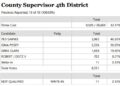
The recommended budget passed on a 4-0 vote, with District 2 Supervisor George Turnboo absent. The motion was introduced by District 3 Supervisor Brian Veerkamp and seconded by District 4 Supervisor Lori Parlin, with support from District 1 Supervisor Greg Ferrero and District 5 Supervisor Brooke Laine.
While the budget avoids immediate reductions to county services, board members expressed concern about the long-term effects of conflicting state and federal funding policies that could substantially impact future county finances.
“This year’s budget reflects both stability and caution,”
county officials indicated during budget discussions, emphasizing that state and federal governments remain out of alignment on several major funding programs affecting local government operations.
Record Budget Masks Signs of Fiscal Tightening
Although the recommended budget totals a record $1.25 billion, county financial officials say the headline figure does not necessarily indicate expanding local government spending.
Governmental Funds — which account for most county operations — total just over $1 billion, representing a $39 million decline from the prior fiscal year. Much of that reduction is attributed to the completion of several major capital improvement projects that had significantly inflated previous budgets.
Among those projects are the Mosquito Bridge replacement and the Placerville Jail Expansion, both of which required substantial funding commitments in recent years.
The county’s General Fund, which supports core local services and discretionary spending, is budgeted at $486.6 million, a $15.3 million increase, or roughly 3%, compared to fiscal year 2025-26.
Departmental operating budgets are proposed at $216.5 million, an increase of $7.64 million, or 4%, largely driven by negotiated employee compensation increases and rising healthcare costs.
Wildfire Preparedness Drives New Spending
One of the most significant contributors to General Fund growth is the Office of Wildfire Preparedness and Resilience.
County officials said the office continues expanding operations through a combination of state and federal grant funding as El Dorado County prioritizes wildfire mitigation, emergency preparedness and forest resilience efforts.
The budget also reflects increased administrative and operational demands tied to federal policy changes, including compliance requirements associated with federal H.R. 1 legislation affecting social services and healthcare programs.
Despite those pressures, the county’s projected General Fund carryover improved from approximately $16 million to $21.8 million, providing additional fiscal flexibility heading into the new budget year.
Revenue Growth Remains Uneven
The budget projects total county revenue of approximately $1.09 billion.
Of that amount, nearly $369 million — roughly one-third of total revenues — comes from intergovernmental sources, including state and federal programs with spending restrictions attached.
That reliance on outside funding sources has become a growing concern among county leaders, who note that grant funding often limits local discretion over how money can be spent.
Property tax revenue, the county’s largest discretionary revenue source, is expected to increase by approximately 4%, or $5.1 million, during fiscal year 2026-27.
While positive, the increase remains below historical trends. County budget analysts previously reported that property tax growth has slowed significantly and now trails the average growth rate experienced during the previous decade.
Meanwhile, discretionary Transient Occupancy Tax revenue — generated from hotel stays and short-term vacation rentals — is projected to increase by just 2.1%, or approximately $150,000.
The modest gain follows multiple years of declining tourism-related revenues that contributed to an estimated $17 million to $20 million structural budget shortfall and prompted the county to eliminate funding for Visit El Dorado and other tourism-related programs.
Staffing Stabilizes After Prior Reductions
The recommended budget includes a modest increase of 4.45 net full-time equivalent positions.
That follows a difficult budget cycle in 2025-26, when county leaders eliminated 39.2 full-time equivalent positions as part of broader efforts to address slowing revenue growth and rising state-mandated costs.
Although no major workforce reductions are proposed this year, county documents indicate a Reduction in Force action will eliminate three filled positions effective July 11, 2026.
The staffing changes underscore the county’s ongoing efforts to balance rising personnel costs with limited discretionary revenue growth.
Looking Ahead
Supervisors characterized the recommended budget as a temporary framework rather than a long-term solution.
Despite the record appropriation level, county leaders repeatedly emphasized that many of the budget’s increases are tied to restricted grants and mandated expenditures rather than expanded local services.
The Board of Supervisors is scheduled to return Sept. 29 to formally adopt the final fiscal year 2026-27 budget after additional state budget information becomes available.
For now, county officials say the spending plan preserves services and maintains financial stability. However, they caution that future budgets may require more difficult choices if economic conditions weaken or state and federal funding streams become less predictable.