PLACERVILLE, Calif. —
Byron Sher spent much of his professional life in classrooms, courtrooms and the California Capitol.
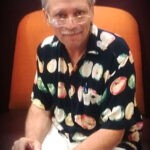
But for residents of El Dorado County, another chapter of Sher’s life may be just as memorable: the former Stanford Law School professor and state senator eventually made a Placerville pear orchard his home.


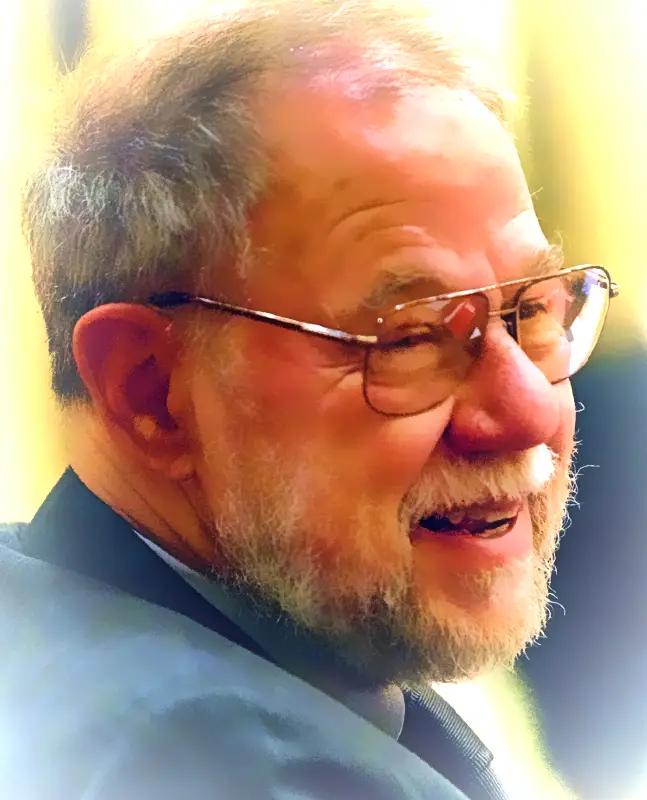
Sher died Sept. 12 at age 98 at his orchard in Placerville, according to reports from his family and multiple news organizations. His death brought an end to a career that stretched from Stanford University and Palo Alto politics to the California Legislature and some of the state’s most consequential environmental laws.
Sher was born Feb. 7, 1928, in St. Louis, Missouri. He graduated from Washington University in St. Louis in 1949 with a degree in finance and earned his law degree from Harvard Law School in 1952, where he ranked second in his class.
He joined the Stanford Law School faculty in 1957 after teaching at Harvard Law, Southern Methodist University and the University of Southern California. He would remain associated with Stanford Law for more than three decades.
From Palo Alto politics to Sacramento
Sher entered politics during debates over the proposed Oregon Expressway in the Palo Alto area. He was elected to the Palo Alto City Council in 1965 and later served two terms as mayor.
His political career eventually took him to Sacramento.
Sher won election to the California Assembly in 1980 and became a prominent voice on environmental and natural-resources issues. He later served in the California Senate, where he continued working on environmental legislation before leaving the Legislature in 2004.
Among the legislation associated with Sher were measures addressing clean air, safe drinking water, groundwater protection, waste management, underground storage tanks, mining reclamation and river conservation.
His environmental work also extended into emerging climate policy.
In 1988, Sher authored legislation requiring California to inventory sources of greenhouse gases. The measure marked the first time the term “global warming” appeared in California legislation, according to the California Environmental Protection Agency.
“The heat is on. The state can either ignore what science is telling us, or we can respond to this challenge in a responsible way,” Sher told the Sacramento Bee in 1989.
California Secretary for Environmental Protection Yana Garcia remembered Sher as an influential environmental lawmaker.
“While humble by nature, Sen. Sher was a towering environmental figure,” Garcia said in a statement. She credited him with helping protect “the air we breathe, the water we drink and the natural resources we all cherish.”
A different kind of retirement in Placerville
After leaving the Legislature, Sher remained involved in environmental and regional planning issues. He served on the Sierra Nevada Conservancy board and the Tahoe Regional Planning Agency governing board and later served with the Planning and Conservation League.
But his later years also brought him into the agricultural life of El Dorado County.
Sher and his family moved to the Sierra Nevada foothills, where he managed a historic pear orchard in Placerville. His son, Benjamin Sher, described his father as becoming something of a “hobbyist farmer.”
That description understates the scale of the operation.
The orchard produced an estimated 550 tons of Bosc and Bartlett pears in one harvest, according to The Stanford Daily. Another account put the notable mid-2000s harvest at approximately 500 tons.
Sher’s connection to El Dorado County agriculture was more than ceremonial. A 2001 El Dorado County pear pest-management report lists Byron Sher among participating local growers in a program examining methods to reduce pesticide use while maintaining fruit quality.
The connection between Sher’s environmental philosophy and his life as a grower is notable. His public career focused heavily on the relationship between development, natural resources, pollution and environmental protection. In retirement, he lived in an agricultural landscape where those issues were no longer abstract questions debated in a legislative hearing.
They were part of daily life.
A legacy that reached beyond Sacramento
Sher’s career was unusual in another respect: he was not known as a conventional political showman.
The Los Angeles Times described him as cerebral and soft-spoken, noting that he rarely sought the spotlight, held news conferences or aggressively raised campaign money. Former political colleagues instead remembered a legislator who concentrated on legislation and policy.
That approach helped produce a body of environmental legislation whose effects extended well beyond the communities that elected him.
The California Environmental Protection Agency identified the California Clean Air Act, the California Safe Drinking Water Act and the Groundwater Protection Act among Sher’s major legislative accomplishments.
His later appointment to the Tahoe Regional Planning Agency governing board also brought him into an institution with direct importance to the Sierra Nevada and the Lake Tahoe Basin, including communities in El Dorado County. Historical TRPA records identify Sher as a California Senate Rules Committee appointee to the governing board.
For Placerville, however, Sher’s legacy has a more personal dimension.
He was not simply a former Sacramento lawmaker who retired to the foothills. He became part of the agricultural landscape that has long defined the western slope of El Dorado County.
The image is a fitting one for a man whose professional life centered on environmental stewardship: after decades spent writing laws about California’s air, water and natural resources, Sher spent his later years among the pear trees.
Family and memorials
Sher’s wife, Linda Bowser Sher, died in 2014 after 62 years of marriage. She was an artist who spent considerable time at the family’s Placerville orchard and maintained a studio there.
Sher is survived by his children, Adrienne, Benjamin and Katherine; five grandchildren; and a great-granddaughter.
His family has requested that, instead of flowers, memorial contributions be made to the International Rescue Committee.
For California, Sher leaves behind statutes and policies that helped shape environmental regulation for generations.
For El Dorado County, his story carries another distinction — that of a former Stanford professor and state senator who found a second life in Placerville, working the soil and tending a pear orchard in the Sierra foothills.
After a lifetime spent shaping California law, Byron Sher spent his final years close to the land those laws were written to protect.