PLACERVILLE, Calif. — A towering relic of California’s musical past is creating present-day challenges in Placerville, where a rare 19th-century Bergstrom pipe organ remains locked away in storage, costly to restore, and still without a permanent home.
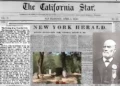
The organ, crafted around 1885 by Swedish immigrant John Eric Bergstrom, is believed to be one of only two or three surviving Bergstrom instruments in California. Many of the organ builder’s works were destroyed in the 1906 San Francisco earthquake, making the Placerville instrument a rare survivor of the state’s early cultural history.

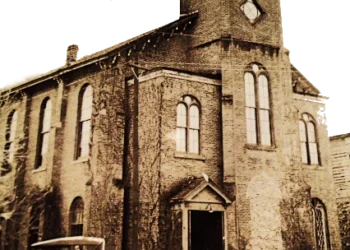
The massive organ was purchased in 1904 from a church in Oakland for $2,500 by the Placerville Methodist-Episcopal Church, later known as the Placerville Federated Church. For decades, it served as a musical and spiritual centerpiece inside the downtown brick church at the corner of Cedar Ravine Road and Main Street.
When that church was razed in the late 1950s, local church members Neal and Sisson undertook months of painstaking work to save the instrument. The organ was dismantled and relocated to the El Dorado County Fairgrounds around 1959–1960, where it has remained in storage for more than 60 years.
Standing approximately 22 feet tall and occupying about 400 square feet, the organ features gold-leafed hardwood, intricately stenciled pipes and a complex system of levers, bellows and air valves. Originally powered by water pressure, it represents a level of craftsmanship rarely seen today.
Now housed in a locked fairgrounds warehouse known as the “Organ Room,” the instrument is no longer playable. It is typically covered by a protective drape and is occasionally visible to the public only as a backdrop during events such as gem and mineral shows.
Restoring the organ is the primary obstacle. As of late 2025, estimates place restoration costs at roughly $200,000, with an additional $30,000 needed to relocate it to a suitable venue. Fairgrounds officials and local preservation advocates say the organ’s size, fragility and expense have complicated efforts to find it a new home.
“This is not just an old instrument—it’s a significant piece of California history,”
an El Dorado County Fairgrounds spokesperson said in a written statement.
“But preserving it requires resources well beyond what we currently have.”
The contrast is stark when compared with Bergstrom’s other surviving California organ, Opus 66, which was successfully restored and installed at Jacuzzi Family Vineyards in Sonoma County in recent years. That project has become a touchstone for Placerville advocates, illustrating both what is possible and how difficult such an undertaking can be.
For now, the Bergstrom pipe organ remains silent, its future uncertain, as local officials and volunteers continue searching for funding and a permanent home capable of bringing the historic instrument back to life.