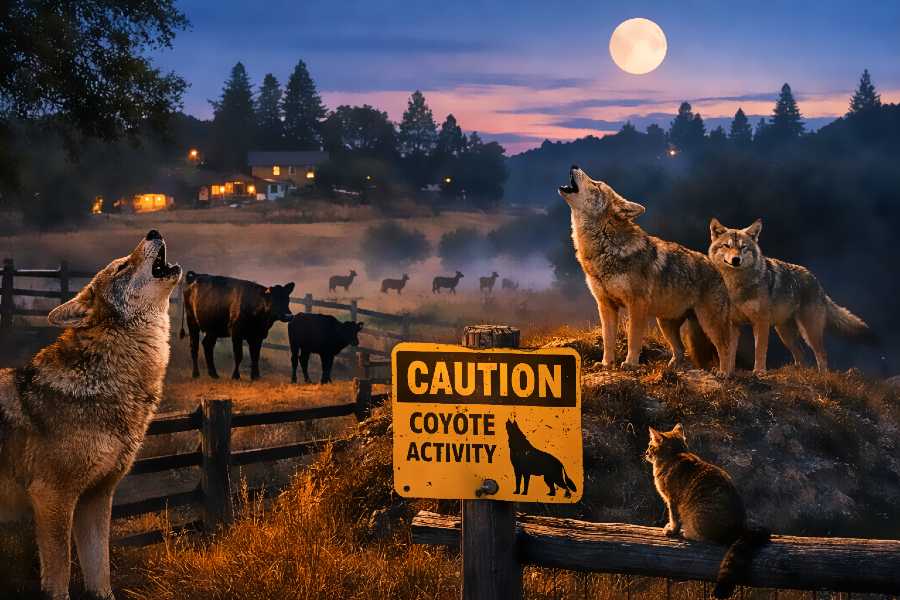
EL DORADO COUNTY, Calif. — A surge of late-night coyote howling has prompted concern among rural residents across parts of El Dorado County, where neighbors say they are hearing multiple packs calling to each other and worrying about pets and livestock.
The discussion gained traction this week on a local social media forum after resident Diane Hawks asked whether others felt coyotes had become “overpopulated” in the area.

“Several times every night, I hear three different packs calling to each other,”
Hawks wrote, adding that the sounds often keep dogs barking and howling.
“I’m always wondering what their kill was and hoping it wasn’t someone’s pet.”
Dozens of residents chimed in with mixed experiences. Some said they now hear coyotes nightly. A rancher in the discussion said coyotes were heard yipping near cattle and calves, raising fears about potential attacks.
“I was just writing a reply and heard them in my pasture yipping at my cattle,”
one commenter wrote.
“I’ve got calves out there right now.”
Others pointed to perceived changes in local wildlife. Several residents said deer numbers appear lower than decades ago, while Hawks noted she rarely sees foxes anymore, speculating they may have been pushed out or killed.
Seasonal Behavior, Not Necessarily Overpopulation
Wildlife experts say increased vocalization does not automatically mean coyotes are overpopulated. According to guidance from the California Department of Fish and Wildlife (CDFW), coyotes are highly vocal animals, and howling often increases during certain times of year, including breeding season and when adults are teaching young coyotes to hunt and communicate.
“Hearing more coyotes doesn’t always mean there are more coyotes,” CDFW has stated in public advisories. “Howling is a normal behavior used to communicate territory and family presence.”
Coyotes are common throughout El Dorado County, from foothill neighborhoods to more remote ranchland. They play a role in controlling rodents and other small animals, though conflicts can arise when human development overlaps with habitat.
Safety Advice for Residents
CDFW recommends residents keep pets indoors at night, secure livestock with proper fencing or guardian animals, and remove attractants such as unsecured trash or pet food left outside. The agency generally discourages feeding or attempting to interact with coyotes and advises hazing—such as making loud noises—if a coyote approaches too closely.
Despite differing opinions, the online discussion underscored a shared concern for safety and the changing character of rural life.
“Some nights it sounds like they’re right on the other side of our gate,”
Hawks wrote in a follow-up comment.
“Something needs to be done—but we also need to be smart about it.”
What Comes Next
County officials have not announced any new coyote management actions. Residents experiencing aggressive behavior are encouraged to report incidents to CDFW or local animal control so patterns can be tracked and addressed if necessary.