LAKE TAHOE, Nev. — Scientists from around the world gathered last week at the University of Nevada, Reno to address an unusual conservation challenge: how to protect the largest trout species on Earth.
The three-day workshop brought international researchers to the shores of Lake Tahoe, where they examined threats facing giant trout species found across Europe and Asia while drawing lessons from the region’s own history with native fish.

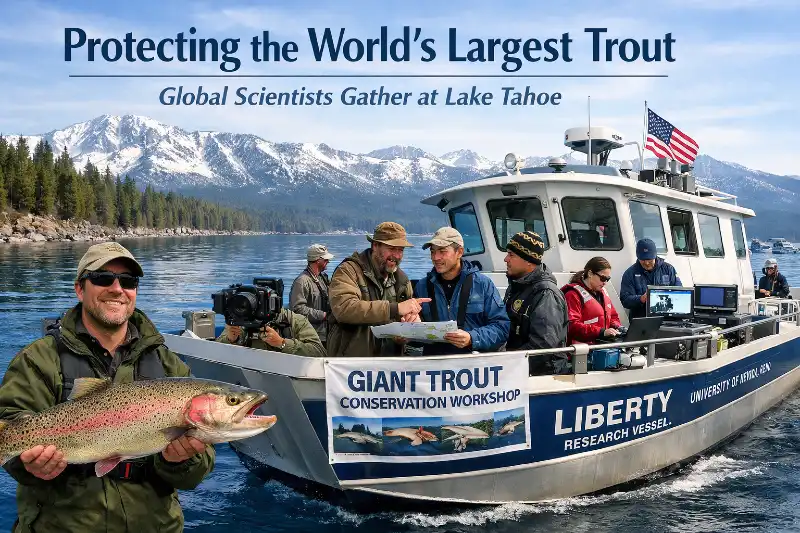
On a bright but chilly afternoon at Tahoe City Marina, scientists boarded Liberty, a research vessel operated by the university. The boat is part of UNR’s fleet used to collect environmental data, study water clarity and monitor lake conditions. University officials say a second, larger research vessel capable of carrying up to 15 people is expected to join the fleet this September.
As the boat moved into deeper water, research professor Zeb Hogan said the location carried special significance for the discussion.
“And so we’ve come together to try to share information, to try to figure out ways to better protect these fish,” Hogan said. “One of the reasons why being out here on Tahoe is so relevant is that Lake Tahoe used to be home to North America’s largest cutthroat trout species.”
That fish — the Lahontan cutthroat trout — once thrived in Lake Tahoe but disappeared from the lake by the 1930s. Overfishing, habitat loss and the introduction of non-native species drove the population’s collapse. Today the trout still survives in isolated locations across Nevada, including Pyramid Lake and Summit Lake.
The Tahoe workshop focused on five species of giant trout in the genera Hucho and Parahucho, collectively known as taimen. These fish inhabit rivers across Mongolia, Russia, Japan, China and parts of Eastern Europe and can grow to massive sizes, making them among the largest freshwater fish in the salmon family.
Participants included researchers from Europe, Mongolia, China, Japan and Russia, along with scientists from universities across the United States. A representative from the Summit Lake Paiute Tribe also joined the workshop to provide insight into ongoing efforts to protect Nevada’s Lahontan cutthroat trout.
Matthew Sloat, science director at the Wild Salmon Center, said protecting giant trout does not require perfect knowledge — but it does require identifying the most critical conservation steps.
“We don’t need to know everything about these fish,” Sloat said. “But we want to know the essentials for keeping them around for future generations.”
Across the globe, scientists say large trout face similar threats, including dam construction, climate change and unsustainable fishing pressure. By collaborating internationally, researchers hope to develop strategies that prevent these iconic fish from disappearing the way Tahoe’s native trout once did.
Sudeep Chandra, director of the Tahoe Institute for Global Sustainability, said the workshop highlights how local ecosystems can inform global conservation work.
“What I’d love the community to understand is that we not only work on local issues, but we want to partner and work on global issues and invite the community in to learn about it,” Chandra said.
By the end of the meeting, scientists had begun drafting a collaborative research paper summarizing what is known about the five giant trout species and outlining key priorities for protecting them.
Researchers say the lessons learned at Lake Tahoe — including the loss of its native giant trout — may help guide conservation efforts worldwide.