COLOMA, Calif. — In the spring of 1848, as gold was quietly confirmed along the South Fork of the American River, a little-known courier helped carry the news that would transform California—and the nation.
, represent a pivotal moment in American history when the news of gold began its official journey east. This date marks the arrival of Sam Brannan at Sutter’s Fort
aboard the schooner Dice Mi Nana, bringing with him the primary agent of this news:


- The Schooner: Brannan arrived on the Dice Mi Nana, which carried Nathan Hawk as an “express mail carrier”.
- The Passage: Brannan provided Hawk passage from San Francisco to the fort, serving as the first leg of Hawk’s overland trek to notify Brigham Young and others of the gold discovery.
- The Cargo: Hawk was tasked with carrying 2,000 copies of the April 1, 1848, edition of Brannan’s newspaper,
titled “Prospects of California”.
- Content: The article highlighted California’s agricultural potential and its immense mineral wealth, specifically confirming the gold found at Sutter’s Mill in the “valley of Collumah”.
- Strategic Impact: Along the overland trail, Hawk and his party of ten men intentionally redirected wagon trains toward California instead of Oregon.
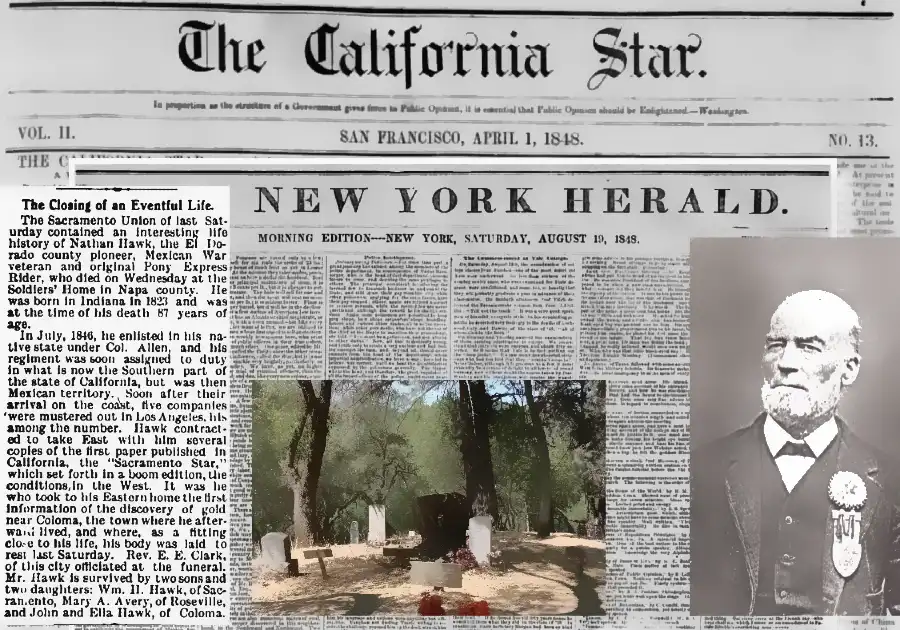
- Coast-to-Coast News: One copy reached New York in July 1848. This led the New York Herald to publish a major report on the discovery on August 19, 1848, officially alerting the East Coast.
- Nathan Hawk’s Legacy: A former member of the Mormon Battalion, Hawk eventually returned to California during the peak of the Gold Rush. He is buried at the Pioneer Cemetery in Coloma, not far from where the discovery that changed his life took place.
His name was Nathan Hawk.
Historical records tied to Sutter’s Fort and the journals of John Sutter place Hawk at the center of one of the earliest organized efforts to spread word of the discovery at Sutter’s Mill.
A Mission Begins at the Fort
On April 8, 1848, Sutter recorded the arrival of Sam Brannan aboard the schooner Dice Mi Nana. With him was Hawk, described in Sutter’s log as an “express mail carrier,” tasked with transporting critical information east.
Brannan provided Hawk passage from San Francisco to the fort—marking the first leg of a journey that would ultimately carry news of gold across the continent.
Hawk’s cargo was both practical and historic: approximately 2,000 copies of the April 1, 1848 edition of The California Star, one of the region’s earliest newspapers.
At the heart of that edition was an article by Dr. Victor Fourgeaud titled “Prospects of California.” It detailed not only the region’s agricultural promise but also its “immense mineral wealth,” including confirmed gold findings near Coloma.
Redirecting the Overland Trails
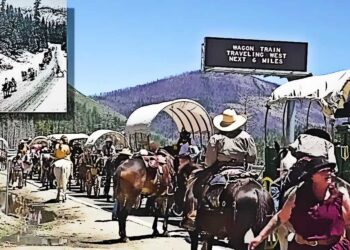
Hawk did not travel alone. Accompanied by a party of ten men, he headed east toward Salt Lake City to inform Brigham Young and other settlers.
Along the way, Hawk and his companions shared the contents of the newspaper with wagon trains moving west. According to historical accounts, their message was clear: bypass Oregon and head to California.
That redirection would prove consequential.
“The article highlighted California’s immense mineral wealth,”
one historical summary notes,
“and travelers were urged to reconsider their destination.”
From Coloma to New York
By July 1848, one copy of The California Star had reached New York. Just weeks later, on Aug. 19, the New York Herald published a two-column report on the gold discovery—the first major East Coast confirmation of the find.
The report helped validate what had, until then, been dismissed by many as rumor.
President James K. Polk further cemented the news in a Dec. 5, 1848 address to Congress, confirming the discovery and accelerating national interest.
A Four-Month Journey That Changed History
From the moment Hawk departed California to the publication in New York, the news traveled coast to coast in roughly four months—an extraordinary feat in an era before telegraphs reached the Pacific.
The result was immediate and profound.
An estimated 90,000 people arrived in California in 1849 alone, with total Gold Rush migration swelling to roughly 300,000 by 1855. What began as a regional discovery became a global phenomenon.
Hawk’s Final Resting Place
Despite his pivotal role, Nathan Hawk remains largely absent from popular Gold Rush narratives.
A former member of the Mormon Battalion, he eventually returned to California during the height of the Gold Rush. Today, he is buried at Pioneer Cemetery—just miles from where the discovery that altered his life, and the course of American history, first took hold.
His story underscores a simple truth: history is not only shaped by those who make discoveries, but also by those who carry the news.