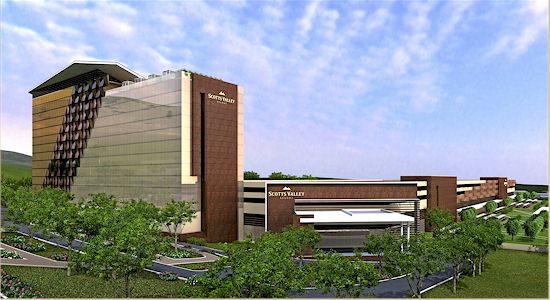
VALLEJO, Calif. (Jan. 4, 2026) — A long-planned casino project by the Scotts Valley Band of Pomo Indians that could introduce a major new gaming destination in the Bay Area is moving ahead with a limited preview venue in Vallejo as the tribe continues to pursue full development of a proposed $700 million resort casino. The initiative, which has sparked opposition from neighboring tribes and caught the attention of gaming markets statewide, could have business implications for established casinos along the Highway 50 corridor, including Red Hawk Casino in Placerville and Gaming related concerns in South Lake Tahoe.
The Scotts Valley Band’s plan centers on a 160-acre site near the junction of Interstate 80 and Highway 37 in Solano County, where the tribe intends to build a full casino resort with gaming, housing, a tribal administration building and a substantial biological preserve. While the project’s ultimate approval remains under federal review, the tribe has opened a preview casino featuring Class II gaming machines that can operate without waiting for a final federal decision, Tribal Chairman Shawn Davis said in a statement.


“We are moving forward … and are looking forward to building shared prosperity. Vallejo is our home — we are here to stay and here to make a difference in our community.”
The federal Department of the Interior (DOI) is reevaluating earlier gaming eligibility approval, flagging concerns that the original decision may have involved procedural or legal errors under the Indian Gaming Regulatory Act (IGRA). DOI officials told the tribe that a new, accelerated review is underway, leaving the full resort’s future in legal limbo. Meanwhile, rival tribes such as the Yocha Dehe Wintun Nation and the United Auburn Indian Community have filed lawsuits and argued that the Scotts Valley Band lacks sufficient historical ties to the Vallejo site — a key requirement for gaming eligibility.
For Red Hawk Casino, operated by the Shingle Springs Band of Miwok Indians along the Highway 50 corridor near Placerville, any new large-scale gaming venue within a two-hour drive could mean both challenges and opportunities. Red Hawk draws a broad regional clientele from Sacramento and the Bay Area and is a significant economic engine for El Dorado County with gaming, County Budget contributions, and charitable contributions to local charities including the Food Bank of El Dorado County. Red Hawk Casino Gaming economists and regional analysts note that increased competition — particularly from a Bay Area market that taps into urban and tourist populations — can shift discretionary entertainment dollars. Visitors who might have traveled to Red Hawk after Bay Area visits could opt for a new, closer option, especially if the Vallejo project includes integrated resort features and lodging.
However, competition isn’t the only dynamic at play. Expanded gaming in the Bay Area could raise the overall profile of tribal gaming destinations in Northern California, potentially increasing interest in multi-destination casino travel packages that include Placerville. Local tourism officials in El Dorado County point out that Red Hawk’s proximity to Lake Tahoe and its Highway 50 travel corridor still offers unique appeal compared with an urban or suburban casino site. Some regional marketing efforts now emphasize a “destination circuit” approach, encouraging travelers to experience multiple venues across the region.
Opponents of the Vallejo project — including some tribal groups — contend that adding another major casino in Northern California could dilute revenue streams currently supporting tribal governments, services and local economies elsewhere. Anthony Roberts, Chairman of the Yocha Dehe Wintun Nation, has publicly said that his tribe is
“confident that a fair look at the evidence will show Scotts Valley’s claims cannot be sustained,”
underscoring persistent tensions in tribal gaming developments.
As the DOI review continues and legal criteria are tested in court, El Dorado County businesses and policymakers will monitor how potential shifts in gaming traffic patterns may affect local revenue, employment, and tourism. Meanwhile, stakeholders from the Lake Tahoe to El Dorado Hills of the Highway 50 corridor are weighing how to adapt to possible new competitive forces while highlighting the unique experiences offered by their respective destinations.