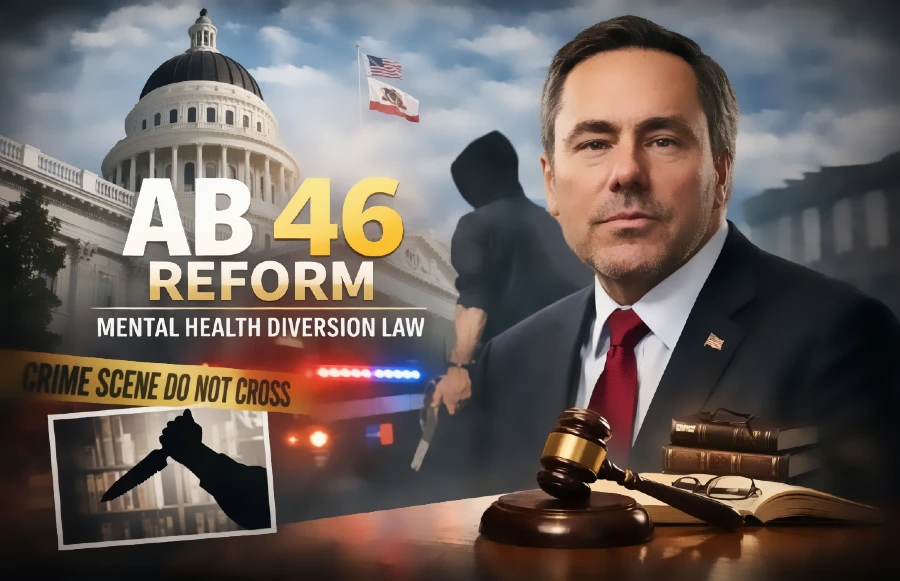
El Dorado County DA Advocates for AB 46 to Reform Mental Health Diversion Law
PLACERVILLE, Calif. — El Dorado County District Attorney Vern Pierson is leading a statewide push to change California’s mental health diversion laws, arguing that current statutes limit judges’ ability to protect the public from dangerous offenders.
Pierson is a primary co-sponsor and prominent advocate of Assembly Bill 46, which is scheduled for a hearing before the California State Senate Public Safety Committee on March 17.


The bill seeks to amend California’s existing mental health diversion statute, California Penal Code § 1001.36, which allows certain defendants with diagnosed mental health disorders to receive treatment instead of jail or prison time.
Pierson and other prosecutors say the law, as currently written, has created a loophole that forces judges to grant diversion even when they believe a defendant may pose a public safety risk.
“Judges should have the discretion to protect the community,” Pierson said in public statements advocating for the legislation. “If someone poses a substantial danger to others, the court should not be required to grant diversion.”
Local Case Highlighted in Reform Push
Pierson has pointed to several cases statewide to illustrate what prosecutors describe as flaws in the law, including a violent incident in Placerville.
In January 2025, a man identified as Jacob Gonzalez allegedly attacked a person sleeping outside the El Dorado County Library branch in Placerville, stabbing the victim multiple times in the head, chest and hand.
Prosecutors have cited the case as an example of how courts may feel compelled to consider diversion even when a defendant’s history raises concerns about public safety.
Pierson has argued that the case underscores the need for legislation allowing judges greater flexibility to deny diversion when a defendant presents what he calls a “substantial and undue risk” to others.
Key Changes Proposed in AB 46
If enacted, AB 46 would introduce several changes to California’s diversion framework.
Expanded Ineligible Crimes:
The bill would add attempted murder and voluntary manslaughter to the list of offenses that automatically disqualify defendants from diversion.
Higher Public Safety Standard:
The measure would replace the current legal threshold requiring proof of an “unreasonable risk” of committing a serious violent offense with a broader standard requiring courts to determine whether a defendant poses a “substantial and undue risk” to another person’s physical safety.
Restoration of Judicial Discretion:
The bill explicitly clarifies that diversion decisions are discretionary, meaning judges could deny diversion even if a defendant technically meets eligibility criteria.
Stricter Mental Health Requirements:
Defendants would need a diagnosis for a qualifying mental disorder within five years of the alleged offense, and a qualified mental health expert would have to testify that the proposed treatment plan directly addresses symptoms linked to the crime.
Additional Procedural Safeguards:
Courts would also be required to state on the record their reasons for denying diversion and consider victims’ rights protections under Marsy’s Law.
Statewide Support from Prosecutors
The effort is backed by the California District Attorneys Association and several district attorneys across the state who argue that recent criminal justice reforms have unintentionally weakened accountability in some cases.
Prosecutors also say the current diversion process allows certain defendants to complete treatment programs and have their charges removed from their criminal records, which they argue can obscure a history of dangerous behavior from future courts and law enforcement agencies.
Supporters of the legislation say the changes would ensure that diversion remains available for appropriate mental health cases while giving courts clearer authority to deny it when public safety is at risk.
Legislative Path Ahead
The Senate Public Safety Committee hearing on March 17 will be the next major step for AB 46 as lawmakers weigh testimony from prosecutors, defense attorneys, mental health advocates and victims’ rights groups.
If approved by the committee, the bill would continue through the California Legislature before potentially reaching the governor’s desk later this year.
The debate highlights an ongoing statewide conversation about how to balance mental health treatment, criminal accountability and public safety.