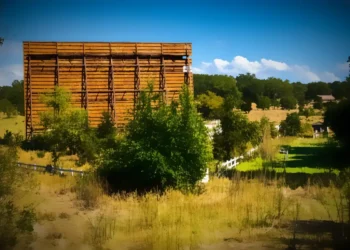
Just east of Fresh Pond along U.S. Highway 50, tucked quietly in the pines about 70 yards from the modern roadway, stands one of El Dorado County’s most enduring relics of the American West: the historic Pacific House.
The weathered structure, built in 1859, is nearing its 167th year—an extraordinary age for a roadside inn that once served wagon trains, Pony Express riders, stagecoaches, and eventually early automobiles rumbling across the Sierra Nevada.
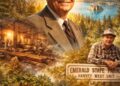

To pass it today is easy. The modern highway sweeps past with little ceremony. But in the late 1800s and early 20th century, Pacific House was a lively crossroads where travelers paused for food, fresh horses, and news from the long road behind them.
A Crucial Stop on the Emigrant Trails
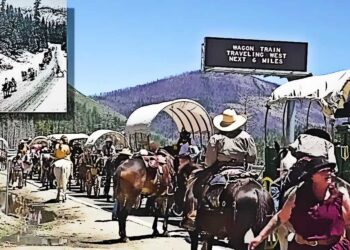
Pacific House first rose during the height of westward migration, positioned along Johnson’s Cut-Off Trail, a rugged branch of the Carson Emigrant Trail used by pioneers crossing the Sierra.
Travelers climbing toward the summit would reach the inn after crossing the American River at Brockliss Bridge, originally built in the mid-1850s. From there, Pacific House offered rest before the difficult climb toward Echo Summit.
By 1860–1861, the station also became part of the legendary Pony Express, serving as a relay point where riders could change horses and continue their dash across the West.
According to historical accounts, the inn later welcomed stagecoach passengers and freight teams operated by the Pioneer Stage Company, which maintained a large stable on site by 1864.
When the Lincoln Highway Came Calling
By the early 1900s, horses gave way to engines.
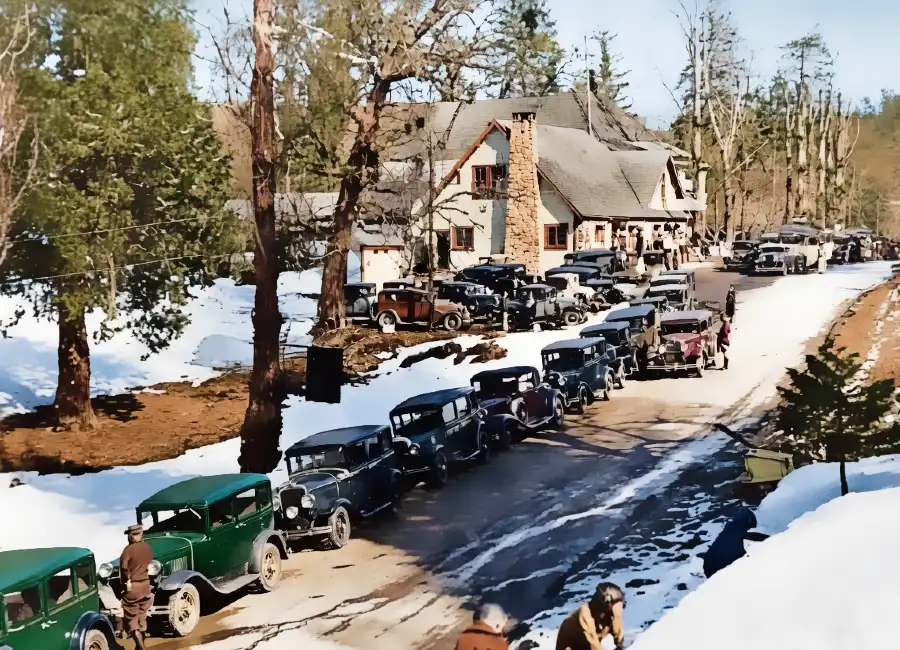
Pacific House became a prominent stop along the Lincoln Highway, the nation’s first coast-to-coast automobile route.
Photographs from the 1920s show automobiles crowding the dirt roadway in front of the building while a traffic officer in tall boots walks among parked cars—an early sign of the automobile era transforming the Sierra corridor.
The stop joined a network of legendary mountain waystations including Strawberry Station, Sportsman’s Hall, and the old Pony Express station at Yank’s Station.
A Post Office and Community Hub
The location became more than a traveler’s stop.
A post office named Pacific opened there on March 10, 1880, with Adam Kessebring Jr. serving as the first postmaster. The name was later changed to Pacific House in 1958 to prevent confusion with other California locations.
For decades the area around the inn bustled with activity—gas stations, groceries, and small businesses serving motorists heading into the mountains.
Memories That Refuse to Fade
Even after the highway shifted and businesses faded, memories of Pacific House linger.
Grant Hosier, who lived nearby as a child in the early 1950s, recalls catching the school bus there and stepping inside the building’s rustic interior.
“I remember eating burgers, playing pinball and staring at all the old German beer steins that lined the wall up by the roof line,” Hosier wrote while recalling visits to the site decades later.
Those recollections paint a picture of a roadside gathering place where locals and travelers shared stories before continuing deeper into the Sierra.
Weathered but Not Defeated
Today the building is no longer open to the public, and time has left its marks. Yet some who know the structure insist it remains sturdier than it appears.
Local observer Tina Long disputes claims the building is collapsing.
“The building is not collapsing. The hand-hewn beams inside were done by hatchet about 100 years ago. The incredible rock fireplaces and knotty pine interior are still in great condition,” Long said. “That building will be standing 100 years from now.”
Those beams—reportedly crafted by builder Floyd Poole—remain a testament to the durable craftsmanship of the early Sierra frontier.
A Landmark Worth Remembering
Though it sits quietly off the highway today, Pacific House remains one of the region’s most tangible links to the era of wagon trails, stage lines, and early automobile adventurers.
Local historians note that the building’s story mirrors the evolution of El Dorado County itself—from Gold Rush crossroads to agricultural center and modern tourism gateway.
Visitors interested in the corridor’s history can explore artifacts and exhibits at the El Dorado County Historical Museum, which documents the transformation of the wagon road into the Lincoln Highway and eventually Highway 50.
Pacific House may stand quiet now, but like many Sierra landmarks, it continues to whisper stories from an age when every traveler stopped, rested, and shared a tale beside the road.
And if the old beams hold true, it may well be telling those stories for another hundred years.