PLACERVILLE, Calif. — When Placerville Fruit Growers Association opened its doors in 1915 on Main Street, it was built for a different era—one defined by wooden crates, ice-cold storage rooms and railcars hauling El Dorado County fruit to markets thousands of miles away.
More than a century later, the cooperative remains in operation, though its mission has evolved alongside the region it helped shape.
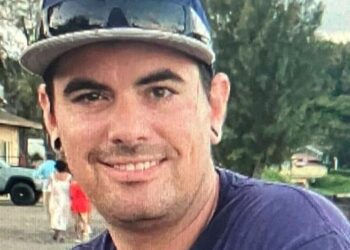
“Nobody knows everything. That’s part of the fun of farming,” said John Caswell, manager of Placerville Fruit Growers Association, which now operates from an 8-acre facility at 4600 Missouri Flat Road.
From Main Street to the nation’s markets
Placerville Fruit Growers began as a cold-storage and packing cooperative, formed so local orchardists could pool resources and gain leverage in pricing and shipping. “Placerville Fruit Growers started off as a co-op because there is strength in numbers,” Caswell said.
By the 1940s and 1950s, that strategy paid off. PFGA grew into one of the largest packing operations in the United States, representing about 300 member growers at its peak. Pears were the backbone of the business, prized for their durability during the two- to three-week rail journey to East Coast markets. Oranges were also shipped.
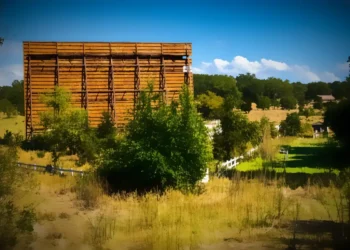
Historic photographs and county exhibits document PFGA’s reliance on the Placerville Branch railroad, with packing sheds and rail spurs forming the backbone of the operation. During those years, El Dorado County ranked among the state’s most productive pear regions.
Crisis and reinvention
According to figures provided by the association, El Dorado County produced 52,000 tons of pears from 3,400 acres in 1958. But a devastating blight swept through orchards in the late 1950s and early 1960s, cutting production to 8,500 tons by 1962.
The collapse forced a reckoning.
Growers began diversifying into apples, cherries, wine grapes, peaches, nectarines and Christmas trees, particularly in what became known as Apple Hill. That diversification, coupled with direct-to-consumer “ranch marketing,” laid the groundwork for the region’s agritourism economy.
Leaders such as Ed Delfino, a former El Dorado County agriculture commissioner, and Joan Delfino helped organize growers and promote Apple Hill as a destination, reshaping how local farms survived in a post-pear economy. Early wineries, including those operated by the Boeger family, further shifted crop choices and market demands.
PFGA adapted as well. As rail freight gave way to trucking, the cooperative continued supporting growers with supplies, storage and shared infrastructure. During the Vietnam War era, the association even rented warehouse space and packaged K-rations for U.S. troops.
“There were always jobs available,” Caswell said, noting that many local high school students worked summer shifts at the plant.
Fire, relocation and a new chapter
In 1976, a devastating fire destroyed the PFGA facility, marking the end of an era. The loss prompted relocation to Missouri Flat Road, where the cooperative rebuilt and redefined itself.
Caswell noted that the organization’s survival over more than 105 years came down to leadership. One of those leaders was his own grandfather, who joined the co-op in 1917. “They had good leaders and good board members who were open to new ideas,” he said.
PFGA today
Today, Placerville Fruit Growers Association no longer ships fruit, but it remains a critical support hub for agriculture in El Dorado County. Membership now totals about 33 growers, ranging from large operations to small family farms, boutique wineries, ranchette owners and home gardeners.
The store carries drip irrigation systems, fencing, water tanks, fertilizers—organic and inorganic—sprayers, PPE, stove pellets and specialty items, including owl boxes made in neighboring Amador County. PFGA also offers a certified public weigh scale.
“We don’t judge,” Caswell said of fertilizer choices, adding, “We have hard-to-find items, things you can’t get elsewhere.”
Store manager Norm Hammond, an employee of 16 years, said he enjoys the work because he is “always learning on the job.” Sales associate Beau Cleveland, with four years at PFGA, said helping customers solve problems is the best part of the job.
The cooperative is open Monday through Friday from 8:30 a.m. to 5 p.m. and Saturday from 9 a.m. to 1 p.m., and is closed Sundays. More information is available at (530) 622-2640.
A collective legacy
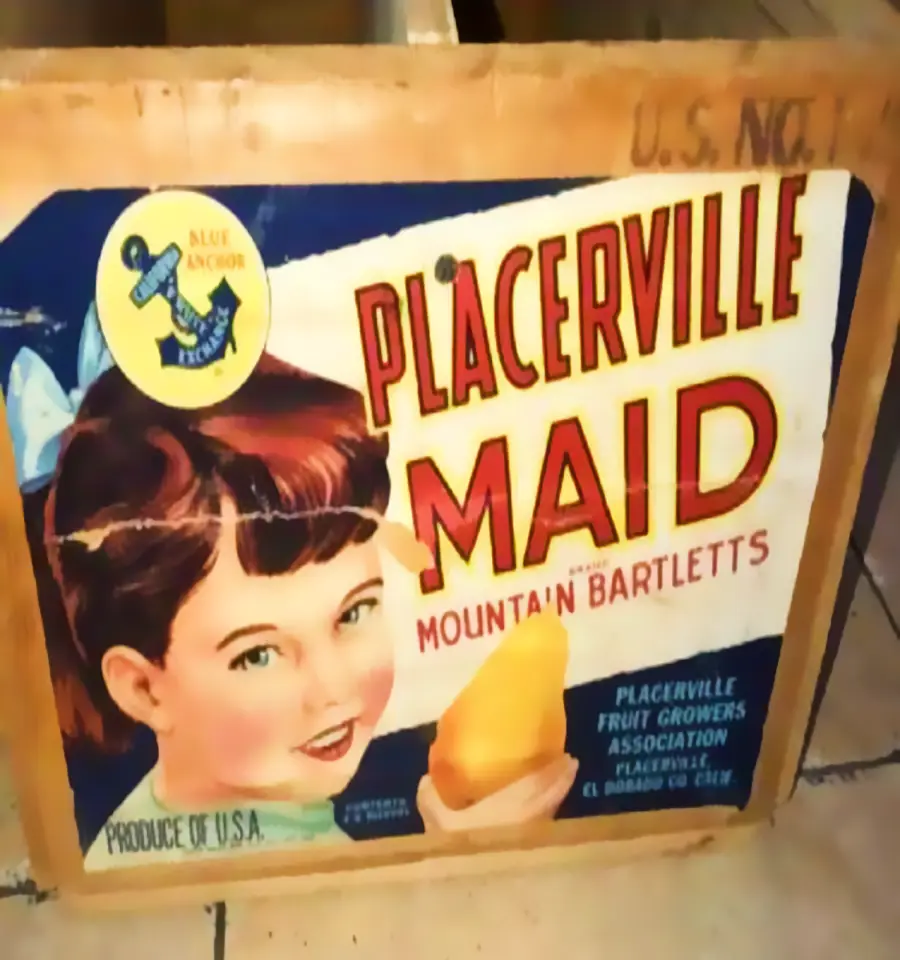
While no single celebrity name defines Placerville Fruit Growers Association, its true legacy lies in the hundreds of grower-members—many from long-established pear and apple families—who built the cooperative together. Their work endures in vintage fruit crate labels, wooden boxes preserved in local collections, and in the continued viability of agriculture across the county.
As Caswell sees it, PFGA’s story is ultimately about resilience. “Farming keeps changing,” he said. “And we’ve learned to change with it.”