By Cris Alarcon, InEDC Writer. March 17, 2026)
Placerville Mourns Loss of Local Legend Davey “Doc” Wiser
PLACERVILLE, Calif. — El Dorado County is mourning the loss of Davey “Doc” Wiser, a longtime Placerville figure whose devotion to preserving Gold Rush history made him a living symbol of the region’s Old West identity. Wiser died March 16, 2024, at the age of 70.

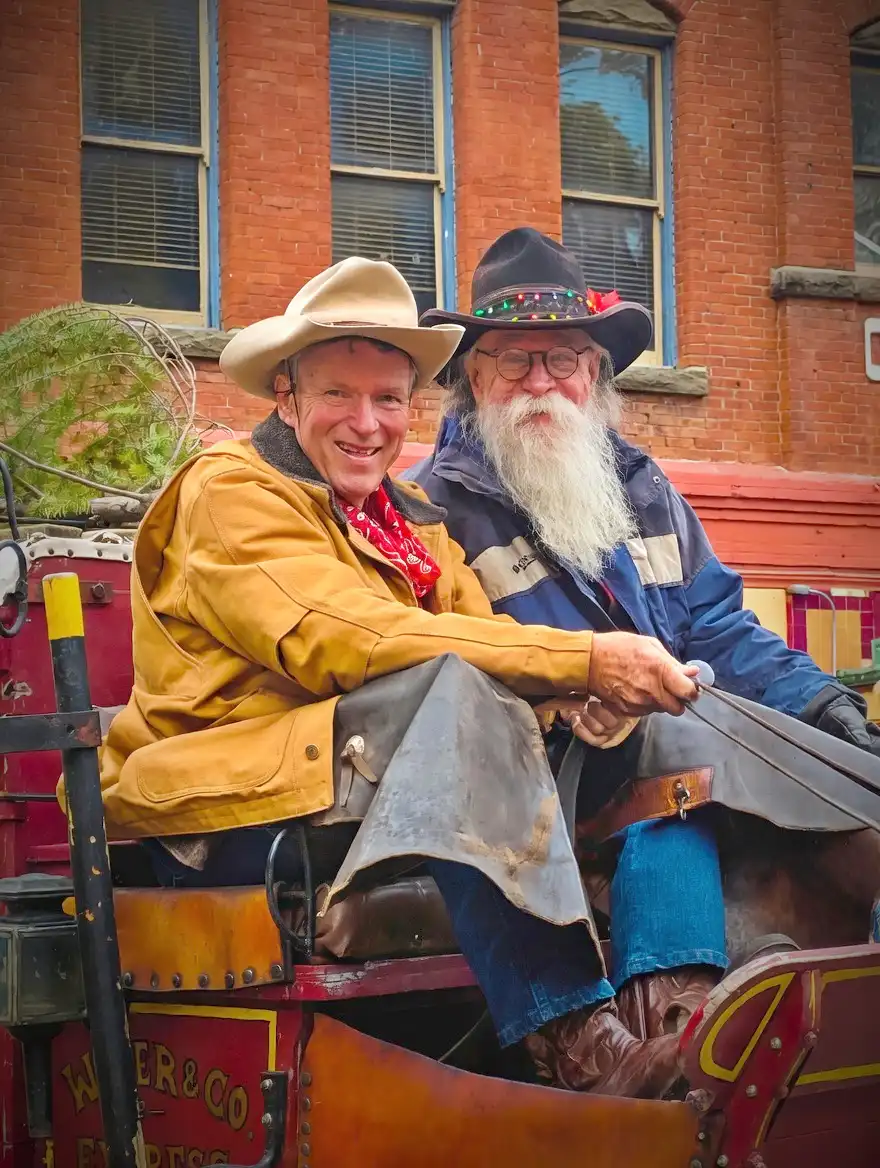
Known for his signature cowboy attire and horse-drawn stagecoach rides along Main Street, Wiser spent decades bringing 19th-century California back to life for residents and visitors alike. His presence became synonymous with Placerville — once known as Hangtown — where he could often be seen in period clothing, greeting tourists or participating in historical reenactments.
Wiser, a Los Angeles native raised in the Eagle Rock neighborhood, moved to El Dorado County on March 28, 1977 — a date and time he famously remembered down to the minute.
“I found my niche in life when I got up here,”
Wiser once said. That niche would evolve into a lifelong mission of embodying the cowboy spirit and preserving local heritage.
His persona, “Doc” Wiser, originated during his first appearance in the Highway 50 Association Wagon Train reenactment in 1977. Dressed in a vintage top hat and tails, driving a doctor’s buggy and carrying both aspirin and a bottle of whiskey in his bag, he created a character that would endure for nearly five decades.
Wiser’s contributions extended beyond entertainment. As a member of the regional cowboy community, including associations tied to groups like the Eldorado Cowboys and the Single Action Shooting Society, he helped sustain a broader culture rooted in traditional Western values — self-reliance, integrity and respect for history.
Local residents say Wiser’s impact went far deeper than appearances.
“I think he is part of the identity of our historical town,”
said Placerville resident Bruce Teie, a longtime friend.
“He’s a historical icon.”
For many families, Wiser’s stagecoach rides became cherished memories. He routinely offered rides free of charge, often on the third Saturday of each month, supported by a small group of volunteers and his wife, Sherry. In return, Placerville merchants once organized a raffle to help purchase him a new stagecoach — a gesture reflecting the community’s appreciation.
Wiser’s likeness appeared in artwork, including a winter scene of Placerville’s courthouse, and on promotional materials for local events. He was also known to participate in weddings, parades and civic celebrations, reinforcing his role as both entertainer and informal historian.
Community reaction to his death has been swift and emotional, with residents describing him as a “legend,” a “pillar” and “a staple” of Placerville life. Many shared personal stories of stagecoach rides, parades and chance encounters that left lasting impressions.
“Placerville won’t be the same without him,”
one resident wrote in an online tribute.
Cowboy culture, which Wiser so visibly embodied, traces its roots to 19th-century ranching traditions influenced by Spanish vaqueros. It emphasizes resilience, honesty and a deep connection to land and community — values Wiser consistently demonstrated through his volunteerism and public presence.
In a town that still embraces its Gold Rush roots, Wiser’s passing marks the end of an era. Yet his legacy — carried forward in photographs, stories and the enduring traditions he helped sustain — remains firmly woven into the fabric of El Dorado County.