By Cris Alarcon, InEDC Writer. April 3, 2026
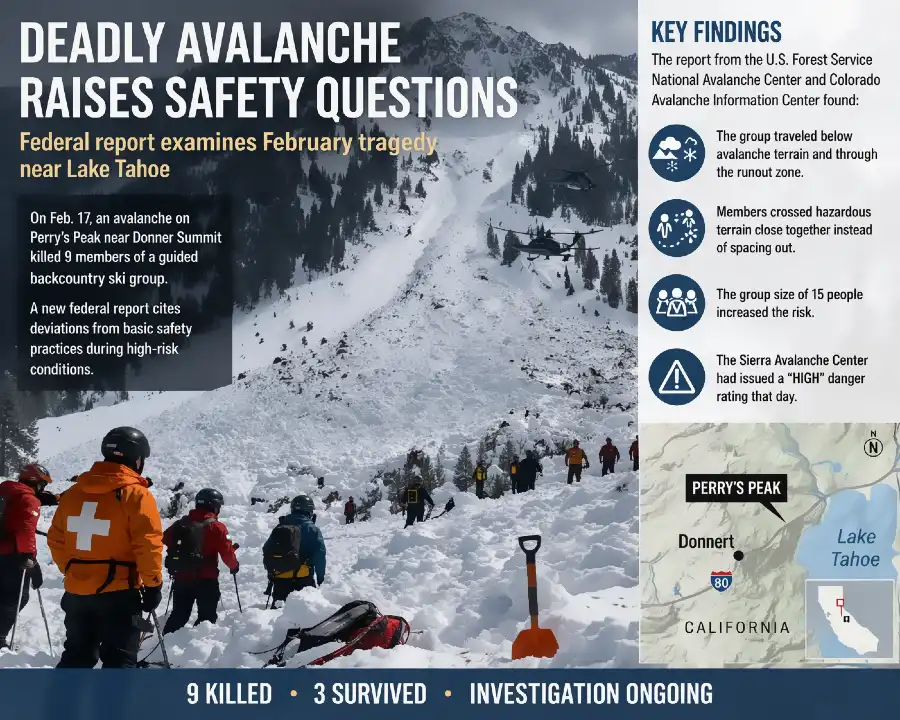
Lake Tahoe Basin, Nev/Calif. — A newly released federal report examining the deadliest avalanche in California history is raising serious concerns about backcountry safety practices, after nine skiers and guides were killed near Lake Tahoe in February.


The report, compiled by the U.S. Forest Service National Avalanche Center and the Colorado Avalanche Information Center, stops short of assigning blame. However, it identifies key decision-making factors that may have contributed to the fatal outcome on Feb. 17 near Donner Summit.
High Risk Ignored
According to investigators, the group of 15 — consisting of four guides and 11 clients — ventured into avalanche-prone terrain despite a “high” danger rating issued that day by the Sierra Avalanche Center. That rating indicated that large, potentially deadly avalanches were “very likely.”
A blizzard was actively impacting the region as the group departed Frog Lake Huts, heading toward the Castle Peak Snowpark near Interstate 80.
The avalanche struck on the slopes of Perry’s Peak, catching 13 members of the party. Nine people — including three guides and six clients — were killed.
Breakdown in Backcountry Protocol
The report highlights multiple deviations from widely accepted avalanche safety practices:
- The group traveled through a known avalanche runout zone.
- Members crossed hazardous terrain in close proximity rather than spacing out.
- The party size — 15 individuals — exceeded thresholds associated with increased avalanche risk.
“Exposing only one person at a time to avalanche terrain is an accepted best practice for backcountry travel,” the report states.
Investigators emphasized that large groups increase both exposure and complexity in high-risk terrain — a factor repeatedly observed in past avalanche fatalities.
A Critical Twist of Fate
In a detail underscoring the randomness of survival, the report found that a guide and a client who had fallen behind due to a malfunctioning ski binding were not caught in the slide.
That delay ultimately proved lifesaving.
The two, along with another client who managed to free himself, were able to locate and rescue survivors buried beneath the snow.
“The Guide and Client not caught in the avalanche were able to save the lives of others,” the report noted.
Company Response and Ongoing Investigations
Truckee-based Blackbird Mountain Guides pushed back on the report’s conclusions, saying it does not fully reflect the circumstances.
In a statement, spokeswoman Mary Ann Pruitt said the company is
“cooperating fully with authorities and will share more when it is appropriate and based on verified and confirmed findings.”
Owner Zeb Blais previously stated that all guides involved were certified through the American Mountain Guides Association and served as instructors with the American Institute for Avalanche Research and Education.
The incident remains under investigation by local law enforcement and state occupational safety regulators, including agencies responsible for workplace safety oversight.
Local Impact and Broader Implications
While the occurred just outside El Dorado County, the tragedy has resonated deeply across the Sierra Nevada region, where backcountry skiing continues to grow in popularity.
Experts say the findings serve as a stark reminder that even experienced guides and trained clients are vulnerable when environmental warnings are not matched by conservative decision-making.
“We offer the following comments based on what is known at the time of this report in hopes that they will help in avoiding future avalanche accidents,” the report stated.
For residents and outdoor enthusiasts in El Dorado County, the lesson is clear: avalanche forecasts are not advisory in name only — they are often the difference between life and death.