
By Cris Alarcon, InEDC Writer. Aug 7, 2026
Buy a bottle, support an agricultural community
For many consumers, buying a bottle of wine is a simple transaction.


In El Dorado County, it can be something more.
That is the message behind the second annual Family Winemakers Month, a statewide campaign launched in August by Family Winemakers of California to promote independent, family-owned wineries and the people behind them.
The campaign asks California wineries to tell their stories digitally throughout the month, while encouraging consumers to visit family-owned tasting rooms, purchase directly from independent producers and share those experiences online.
But for communities such as those in El Dorado County, the campaign carries a message that reaches well beyond the wine itself:
Buy a bottle, support an agricultural community.
A bottle of wine begins long before it reaches a tasting room shelf. It begins in the soil, with vineyard workers, farmers, irrigation systems, equipment, harvest crews and the families who have invested years — sometimes generations — in keeping agricultural land productive.
That connection is especially visible in El Dorado County, where vineyards coexist with orchards, farms, ranches and the tourism businesses that make the Sierra foothills an important destination.
The family behind the bottle
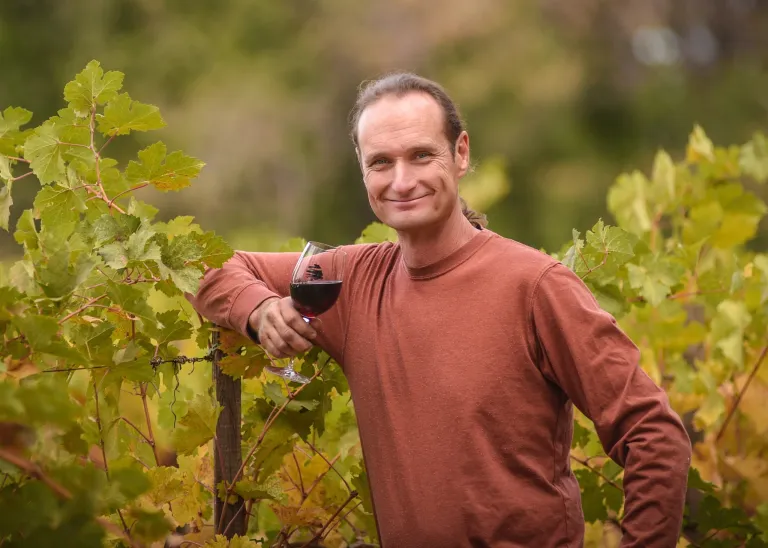
Madroña Vineyards in Camino provides a local example.
The family-owned winery traces its vineyard operation to 1973. Today, the business operates family-owned vineyard sites in the El Dorado appellation and produces estate-grown wines from its foothill vineyards.
For the Bush family, wine is not simply a finished consumer product. It is the result of decades of work on agricultural land.
“Our family has been farming and making wine in El Dorado County for generations,” said Paul Bush of Madroña Vineyards. “When consumers choose family-owned wineries, they’re helping preserve California agriculture and the communities that depend on it.”
That distinction matters.
When a consumer purchases directly from a family-owned winery, the economic benefit does not necessarily stop at the tasting-room counter. The business supports agricultural labor, vineyard maintenance, transportation, equipment, hospitality and other services associated with operating a farm and winery.
The winery also becomes part of the county’s tourism economy, drawing visitors who may eat at local restaurants, stay in nearby lodging establishments and visit other agricultural businesses.
More than wine country
El Dorado County is often promoted for its wine, but wine is only one part of the region’s agricultural identity.
The foothills’ vineyards exist within a larger network of farms and rural businesses. That network is particularly important in areas such as Camino and the Apple Hill region, where agriculture and tourism have developed side by side.
That makes the success of family wineries relevant even to residents who never drink wine.
A functioning agricultural operation keeps land in agricultural use. A successful tasting room attracts visitors. Visitors create demand for restaurants, lodging, retail businesses and other local services.
The result is an economic chain that begins in the vineyard but extends well beyond it.
The bottle is simply where the consumer encounters that chain.
Why independent wineries matter
Family Winemakers of California was founded to represent family-owned and independent wineries and advocate on issues affecting smaller wine producers.
Its Family Winemakers Month campaign takes that identity directly to consumers.
Rather than presenting wine solely as a commodity, the campaign asks consumers to consider the people and places represented by the label.
That approach is particularly relevant as smaller agricultural businesses compete for consumer attention in an increasingly consolidated marketplace.
For a large producer, a consumer’s purchase may be one transaction among thousands. For a family-owned winery, that same purchase is connected to a business whose identity is often inseparable from the land, the family and the local community.
A consumer choice with local consequences
Family Winemakers Month ultimately gives consumers a simple choice.
They can buy wine because they like the bottle.
Or they can look at the label, learn where the wine came from and recognize that the purchase may help support a family farm and the community surrounding it.
For El Dorado County residents, that distinction is particularly tangible.
The vineyards are not abstract agricultural assets somewhere beyond the horizon. They are part of the landscape residents drive past, the tourism economy visitors experience and the rural communities that have depended on agriculture for generations.
This August, Family Winemakers of California is asking consumers to tell those stories and share them online under #FamilyWinemakersMonth.
But the most meaningful way to participate may be considerably simpler.
Buy a bottle.
And remember what is behind it.
A family.
A vineyard.
A farm.
And an agricultural community.
Sources:
Family Winemakers of California, Family Winemakers Month campaign materials.
Family Winemakers of California, June 30, 2026 campaign announcement.
Madroña Vineyards, Camino, California, official winery and vineyard information.