A photograph, a painted name and a local mystery
POLLOCK PINES, Calif. — Sometimes a photograph captures more than a moment. It preserves a piece of local history, even when the story behind the image remains uncertain.
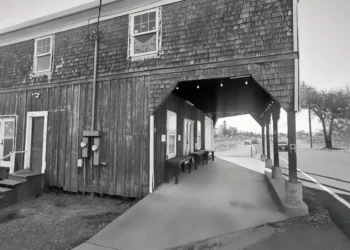
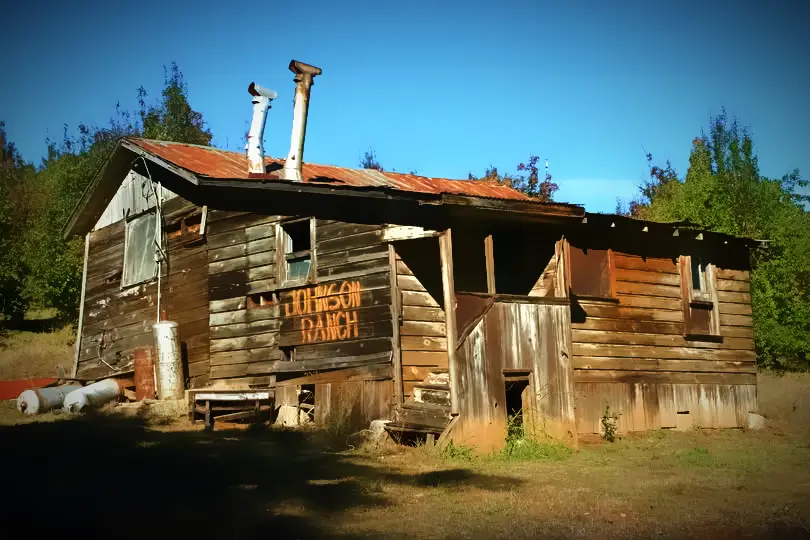
A photograph taken by Eric Edstrom in 2010 offers just such an opportunity for residents interested in the history of Pollock Pines.

The image reportedly shows a house along the Jaquaier Road area, on the left before reaching the old mill. The location has been tentatively identified as a property associated with Applemont Ranch. What makes the photograph particularly interesting is the name painted on the side of the building: “Johnson Ranch.”
That name raises an obvious question: Was this an old ranch with a connection to the area’s pioneer history, or was the name simply associated with the property at some point in its more recent history?
The distinction matters because El Dorado County does have a documented Johnson Ranch, and its history reaches back to the earliest years of California’s Gold Rush.
The real Johnson Ranch was near Camino
The historical connection leads to John Calhoun Johnson, an early El Dorado County settler, businessman and trailblazer.
Johnson arrived in California in 1849 and established a ranch approximately six miles east of Placerville, near present-day Camino. The property became known as Six Mile House and Johnson’s Ranch.
According to historical research published in the Journal of Sierra Nevada History and Biography, the approximately 320-acre property became an important stopping place for emigrants traveling west. Accounts describe hundreds of travelers camping there, with some estimates reaching 1,000 people at a time.
The ranch also served as a military encampment during the Gold Rush era.
Johnson’s significance extended beyond his ranch. He became associated with an alternative route across the Sierra Nevada that eventually carried his name: Johnson’s Cutoff
Johnson’s Cutoff passed through the Pollock Pines region
Johnson’s Cutoff became an important route for emigrants traveling toward the Sacramento Valley and the developing settlements of El Dorado County.
The route crossed the Sierra Nevada, passed through the southern Lake Tahoe region and continued west toward Johnson’s Ranch and Placerville.
It later became part of the transportation history associated with the Pony Express, which operated between 1860 and 1861.
Pollock Pines sits within this broader historical landscape. The community’s roads and surrounding trails preserve reminders of the emigrant routes that crossed the region long before modern Highway 50 became the primary transportation corridor.
A historical marker provides an important clue
There is, in fact, a historical marker near Pollock Pines that explicitly references Johnson’s Ranch.
Located at the intersection of Park Creek Road and Old Carson Road, the marker is titled “Cutoff to Johnson Ranch and Placerville.”
Its inscription includes an account from emigrant Milo Stannard Baker, dated Aug. 13, 1850:
“Came…up to the forks of the road, one goes to Placerville and one to Weaver Town (Weberville), took our right hand road to Placerville or Hang Town, and came to what is called Johnson’s ranch”
The marker was erected in 2011 by Trails West Inc. and is identified as marker JC-25 in the California Trail historical marker series.
That inscription is significant. It establishes that Johnson’s Ranch was part of the historical geography associated with the trails near Pollock Pines.
However, it does not establish that the Applemont Ranch property in the 2010 photograph was the original Johnson Ranch.
The historical marker identifies a route and destination, not the location of the house pictured by Edstrom.
What does that mean for the Applemont Ranch property?
The available historical documentation supports two separate facts:
-
John Calhoun Johnson operated a historically significant ranch near present-day Camino.
-
An emigrant route near Pollock Pines included a branch leading toward Johnson’s Ranch and Placerville.
What remains unverified is the history of the building photographed by Edstrom in 2010.
The painted words “Johnson Ranch” are an intriguing clue, but without property records, historical photographs, ownership documents or other corroborating evidence, it would be premature to identify the building as an original Gold Rush-era ranch structure.
It is possible the name reflected a later property name or an association that has not yet been documented.
For now, Edstrom’s photograph provides a starting point for further research rather than a definitive historical identification.
And that is part of what makes local history interesting. Sometimes a photograph taken in 2010 leads us back more than 175 years, to the emigrants, settlers and pioneers who helped establish the communities we recognize today.
The photograph may not yet have a confirmed story, but the name painted on that building certainly has a place in El Dorado County’s history.