
EL DORADO COUNTY, Calif. — With the Nov. 3 election approaching, Measure S is drawing scrutiny over a question that extends beyond its stated goals of improving hospital facilities, supporting fire protection and maintaining emergency response: How much control will taxpayers retain over the money if voters approve the measure?
The proposed countywide sales tax would add 0.375% to taxable purchases for 30 years. The county’s ballot summary estimates the measure would generate approximately $13 million annually for emergency preparedness, health care and wildfire prevention.


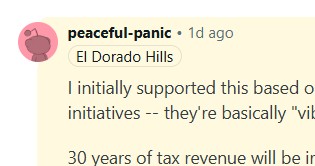
An El Dorado Hills resident writing under the online name “peaceful-panic” said the published arguments initially persuaded them to support Measure S. A closer examination of the proposal, however, prompted concerns about the length of the tax commitment, the terms governing hospital funding and the limits of public oversight.
“I’m particularly skeptical of citizen’s initiatives — they’re basically ‘vibe legislating,’” the resident wrote in a post published about a day before the account was reviewed.
The post raises several questions that voters can investigate in the initiative’s full text and the county’s official analysis. The resident’s concerns are commentary, not findings of wrongdoing. The governing documents, however, provide a basis for examining the measure’s actual requirements.
What the measure would fund
Measure S is formally titled the Emergency Preparedness, Healthcare Access, and Wildfire Prevention Sales Tax Initiative. It combines three priorities: hospital infrastructure, emergency response and wildfire prevention.
Under the initiative, the first full fiscal year’s revenue would be allocated as follows:
-
50% for eligible local hospitals to support qualifying facility and infrastructure improvements.
-
45% for local fire departments and agencies, distributed according to percentages specified in the measure.
-
5% for eligible nonprofit organizations conducting specified wildfire-prevention work.
The initiative also establishes a continuing funding mechanism for hospital debt service. After the first full fiscal year, revenue would be appropriated to eligible hospitals to help pay qualifying bonds or other debt obligations, subject to the measure’s terms and a stated aggregate capital-project limit of $125 million. Any surplus funds remaining after the specified debt-service payments would return to the fund for allocation under the initiative.
These provisions are central to the debate because the measure does not simply authorize annual discretionary grants. It establishes a long-term revenue stream and prescribes how that revenue must be allocated.
For supporters, that structure offers predictable funding for costly infrastructure and emergency services. For critics, it raises questions about the county’s ability to respond if circumstances change over the next three decades.
Hospital ownership and the 30-year commitment
The resident’s most consequential concern involves the initiative’s treatment of hospital ownership.
Section 3.42.060 of the proposed ordinance states that a change in ownership of an eligible hospital would not affect an appropriation made under the continuing hospital debt-service provision. The same section limits the relevant funding to debt service on, or other support for, qualifying hospital bonds or debt obligations associated with eligible capital projects.
That language makes the ownership question a legitimate subject for voter scrutiny. If a hospital changes hands, the measure does not automatically terminate the specified funding arrangement.
The distinction matters: continued funding under the measure is not necessarily the same as unrestricted payments to any future owner. The provision is tied to qualifying debt obligations and the initiative’s other requirements.
The resident asks whether county sales tax revenue should continue supporting Marshall Medical Center if ownership changes, including a possible sale to a for-profit operator or a larger nonprofit health system.
That is a policy question voters may weigh against the measure’s stated objective of maintaining local access to emergency medical care. The precise financial and legal consequences of a future sale would depend on the transaction, the outstanding obligations and the applicable provisions of the ordinance.
The 30-year term makes that question especially relevant. Voters are being asked to approve a financing framework that could outlast current hospital leadership, county supervisors and the circumstances that prompted the initiative.
What does independent oversight actually mean?
The measure requires annual independent audits and an Independent Citizens’ Oversight Committee. The committee must meet regularly and report its findings to the public. Its stated responsibility is to oversee the use of funds and help ensure that expenditures comply with the initiative.
The resident argues that this oversight may be less powerful than the phrase suggests.
The key distinction is between monitoring compliance and having authority to change spending decisions. The initiative requires oversight and reporting, but voters should examine the full text to determine what enforcement powers, if any, the committee has when it identifies a violation.
The ordinance assigns appropriation responsibilities to the Board of Supervisors while also restricting how the money may be spent. Those provisions do not, by themselves, establish that supervisors have unrestricted discretion to redirect the revenue or cancel payments.
The practical question is what happens if an audit identifies a serious problem. Can the county halt an improper payment? Can it require corrective action? What remedies are available if the recipient disputes an oversight finding?
Those questions should be answered from the ordinance and applicable law rather than from assumptions about the meaning of “independent oversight.”
The resident also questioned whether Marshall’s bylaws, policies, financial reports and board-selection procedures are sufficiently transparent. Those concerns require separate examination: the initiative’s public reporting requirements do not necessarily make every internal hospital governance document public.
Voters can ask Marshall to explain how its directors are selected, which financial statements are publicly available and what disclosures apply to the organization. The absence of a document from a website, by itself, does not establish that the document is legally required to be published or that the organization has violated a disclosure obligation.
Why combine hospital funding with fire protection?
Another concern raised by the resident is why hospital infrastructure and wildfire readiness appear in the same tax measure.
The initiative’s stated rationale is that emergency preparedness involves an interconnected system. Firefighters and paramedics respond to emergencies, transport patients and rely on access to nearby medical facilities. The measure also cites wildfire prevention, evacuation planning, emergency alerts and reliable communications as public-safety priorities.
That rationale is reflected in the campaign’s public materials. The official Measure S campaign, El Dorado Ready, describes the proposal as a comprehensive effort to protect emergency medical access, strengthen local fire response and reduce wildfire risk. Its website identifies Marshall Medical Center as the campaign’s sponsor.
The resident offers a different interpretation: combining hospital funding with fire protection may broaden the measure’s appeal by bringing multiple public-safety organizations into the same campaign.
That is a political interpretation, not an established finding about the campaign’s motives. The documented fact is that Marshall representatives approached the County Fire Chiefs Association about a proposed sales tax initiative to fund hospital seismic upgrades and strengthen local fire services. A January 2026 fire district board packet describes those discussions and records the association’s support for the proposal.
The combination therefore reflects an initiative developed with hospital and fire-service interests involved. Whether bundling the priorities makes the proposal stronger or leaves voters with too many decisions tied to one tax is a matter for public debate.
Why use a citizen initiative?
The resident also questions why Measure S originated as a citizen initiative rather than as a proposal developed by the Board of Supervisors.
The county’s legislative record provides a documented timeline. The notice of intent was filed Jan. 5, 2026. On June 23, the Board of Supervisors accepted the certification of petition signatures and ordered the initiative submitted to voters at the Nov. 3 general election. The board subsequently approved a resolution formalizing its placement on the ballot.
The resident suggests the initiative route was chosen because it allows a tax measure to pass with a lower vote threshold than a tax proposed by the board.
That distinction is relevant to the debate, but it should be understood in the context of California law and the specific type of tax involved. The county’s ballot-placement decision does not, on its own, establish the organizers’ reasons for selecting the initiative process.
The documented record does show that the measure qualified through the citizen-petition process. The board’s action placed the proposal before voters; it did not itself constitute voter approval of the tax.
What did county officials say?
The resident also questioned why no sitting county supervisor had endorsed Measure S, arguing that a lack of visible support from county leadership should prompt voters to ask why.
That claim should be distinguished from the official record of the board’s actions. The county’s June and July legislative records establish that supervisors acted to place the qualified initiative on the ballot. They do not, by themselves, establish whether individual supervisors have endorsed or opposed the measure in their personal or campaign capacities.
The resident’s observation about a supervisor clarifying that a procedural vote was not an endorsement would require confirmation from the relevant meeting transcript or recording before it could be presented as a verified quotation.
The distinction is important in local government. Certifying a qualified initiative for the ballot is a procedural action, not necessarily an expression of support for its policy objectives. Residents should evaluate the supervisors’ recorded statements separately from their votes to comply with the initiative process.
County analysis gives voters another source to examine
On Sept. 29, the Board of Supervisors considered a staff analysis of Measure S prepared by the Chief Administrative Office. The county record says staff examined questions involving the sales tax cap, projected revenue and distribution beyond the first year, eligible nonprofit organizations, administrative costs and the findings contained in the initiative. County Counsel reviewed the analysis.
The analysis is particularly relevant to voters who want to move beyond campaign arguments. It was prepared at the board’s direction, and the county record states that staff sent it to Marshall and the Measure S campaign for input before finalizing it.
Residents can review the documents directly:
-
eldorado.legistar.com
-
eldoradoready.org
-
eldoradocounty.ca.gov
-
eldoradoready.org
These sources present different perspectives. The county’s documents explain the measure’s provisions and administrative considerations, while the campaign materials explain the case supporters make for it.
Questions voters should answer before Nov. 3
Measure S presents El Dorado County voters with a decision involving public safety, health care infrastructure and a long-term tax commitment. The need for reliable emergency response and access to hospital care does not eliminate the need to scrutinize how public revenue will be committed and monitored.
Before voting, residents should consider five questions:
-
Funding commitments: What obligations would continue if the eligible hospital changes ownership, and what protections apply to the money?
-
Oversight and enforcement: What specific remedies are available if an audit identifies spending that violates the ordinance?
-
Hospital governance: What information about leadership, finances and decision-making is publicly available?
-
Long-term costs: How much revenue is projected over the full 30-year term, and how might changing economic conditions affect collections?
-
Local control: Which decisions remain with the county, which are prescribed by the initiative and which are subject to independent review?
These questions do not presume that Measure S is either a sound investment or a flawed proposal. They establish the information voters need to make that judgment.
The El Dorado Hills resident’s change of position illustrates a broader point about ballot measures: initial support for a proposal’s goals need not prevent scrutiny of its legal language, financial structure or governance provisions.
For El Dorado County voters, the choice on Nov. 3 is not simply whether hospitals and fire departments need support. It is whether the specific funding mechanism, oversight provisions and 30-year commitment established by Measure S offer the right balance of public benefit, accountability and flexibility.