By Cris Alarcon, InEDC Writer. April 27, 2026
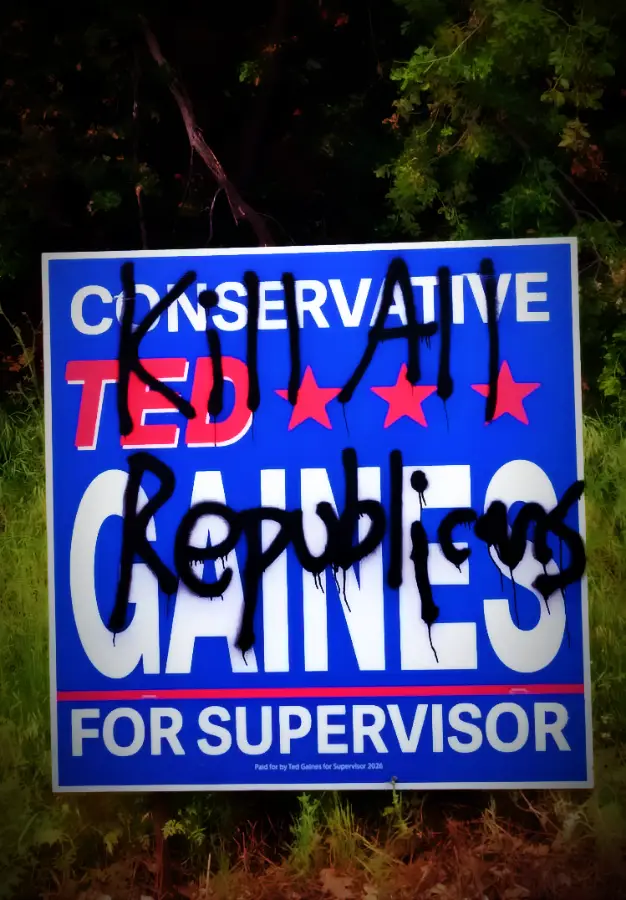
EL DORADO COUNTY, Calif. — As election season intensifies, reports of political sign vandalism and theft are reemerging across communities, highlighting a long-standing but illegal practice often referred to as “sign warfare.”

Local officials and political observers say the defacing or removal of campaign signs—whether through spray-painting, tearing down, or theft—is not only a misdemeanor offense under California law, but also a tactic that can unintentionally benefit the very candidates it seeks to undermine.
“Tampering with political signs on private property is a violation of the law and undermines free expression,”
said a spokesperson for the El Dorado County Elections Office.
“We encourage residents to report incidents rather than take matters into their own hands.”
The practice has deep historical roots. Political messaging displayed in public spaces dates back to ancient Rome, where citizens painted endorsements directly onto walls. In the United States, campaign yard signs gained prominence during the 1824 presidential race involving John Quincy Adams. By the mid-20th century, acts of vandalism—often crude and destructive—were already being documented as a form of political expression.
In recent decades, however, tactics have evolved. Modern incidents range from graffiti alterations and parody messaging to outright destruction, including cutting, burning, or removing signs altogether. The rise of social media and heightened political polarization has further fueled these acts, allowing frustration to spill from digital platforms into physical spaces.
Despite its persistence, the legal consequences remain clear. Under California law, removing or defacing a political sign placed on private property without permission can result in misdemeanor charges, including fines and possible jail time. Depending on the circumstances, additional charges such as trespassing or petty theft may apply.
Legal experts also emphasize that political signs are protected under the First Amendment as a form of core political speech. Interfering with them, they argue, is not simply vandalism but an attempt to suppress constitutionally protected expression.
Political strategists note that such incidents can also have unintended consequences. Morton Blackwell, founder of the Leadership Institute, has long argued that acts of vandalism can generate “moral outrage,” a powerful motivator in political campaigns. Candidates whose signs are targeted may leverage the incidents to draw media attention, energize supporters, and frame themselves as victims of unfair tactics.
In some cases, campaigns have used images of defaced signs in outreach materials or public statements, transforming isolated acts into broader narratives about political hostility and free speech.
For residents of El Dorado County, the message from authorities is straightforward: disagreements at the ballot box should not translate into criminal behavior on neighborhood streets.
As the election season progresses, officials urge voters to channel their energy into lawful civic engagement—casting ballots, attending forums, and participating in respectful dialogue—rather than acts that could carry legal consequences and unintended political fallout.