
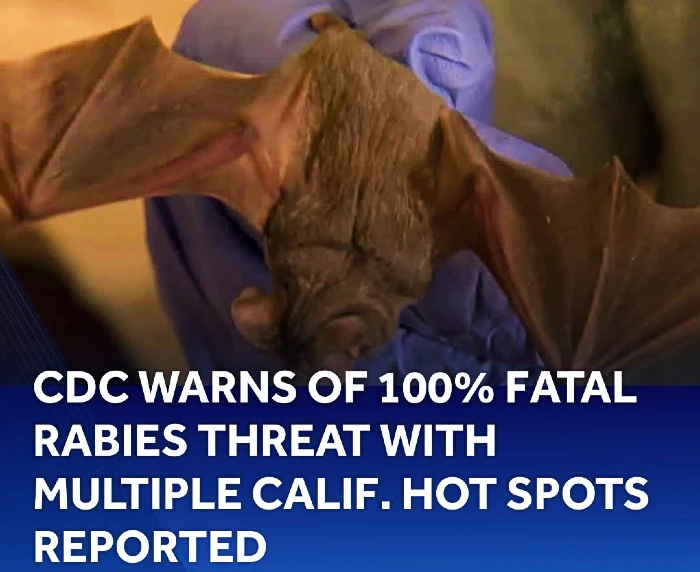
PLACERVILLE, Calif. — El Dorado County residents are being urged to keep a closer eye on pets and wildlife after state surveillance data show four animals in the county had tested positive for rabies through Aug. 31.
The provisional 2026 figures from the California Department of Public Health show two rabid bats and two rabid skunks in El Dorado County, for a total of four confirmed animal cases this year. Statewide, 252 animals had tested positive during the same period, including 232 bats and 19 skunks.


While four confirmed cases do not establish a countywide outbreak, the findings underscore a familiar public-health concern in a county where residents routinely live alongside bats, skunks, foxes and other wildlife.
El Dorado County Animal Services says rabies is endemic in California, meaning the virus remains continuously present in animal populations. Skunks and bats are the county’s most common rabies carriers, although other mammals can become infected.
“Rabies can be fatal.”
That warning from El Dorado County Animal Services has remained central to the county’s public-health guidance. In a 2023 county rabies reminder, Animal Services Chief Henry Brzezinski urged residents to vaccinate their pets and report animal bites promptly.
Wildlife showing unusual behavior can be a warning sign
County officials caution residents not to assume an animal is harmless simply because it is in a residential neighborhood.
Skunks, for example, may naturally be visible during daylight hours, particularly in late summer and early fall when young animals are exploring. But officials say residents should be concerned when a normally wary animal displays unusual aggression, a lack of fear, disorientation, paralysis or difficulty walking.
Residents should not attempt to capture, feed, handle or otherwise approach wildlife exhibiting suspicious behavior.
The county specifically advises residents to keep garbage, pet food, birdseed and other potential food sources secured so they do not attract wild animals to homes and yards.
Pets remain an important line of defense
Vaccination is one of the most important protections available to local pet owners.
California requires dogs to be vaccinated against rabies and licensed, while El Dorado County strongly recommends rabies vaccination for cats as well. The county warns that an infected skunk or bat can expose a household pet, which could subsequently expose people.
For vaccinated pets that come into contact with a suspected rabid animal, the county says a booster vaccination should be administered within 48 hours of exposure. Unvaccinated domestic animals can face much more serious quarantine requirements.
What residents should do after an exposure
A suspected rabies exposure should be treated seriously.
El Dorado County says anyone who is bitten or scratched by an animal, or gets saliva from a suspected rabid animal into an open wound or onto a mucous membrane, should immediately wash the affected area with soap and water and seek medical attention. The incident should also be reported to Animal Services so the animal can be evaluated.
The county also warns that contact with a bat inside a closed room can present a potential rabies risk and recommends contacting Animal Services for guidance rather than handling the bat.
Rabies post-exposure treatment can prevent the disease from developing, but once clinical symptoms appear, rabies is almost always fatal. The county says treatment for a person with a qualifying exposure includes rabies immune globulin and a series of rabies vaccine doses.
El Dorado County remains a rabies-endemic area
The presence of confirmed rabid animals is not new to El Dorado County.
In 2023, Animal Services reported seven rabid skunks during the first half of the year. The county also reported 22 rabid animals in 2022 — 18 skunks, three bats and one cat. Historically, the county has recorded most confirmed rabid animals on the West Slope, including areas around Placerville, Shingle Springs, Georgetown, Garden Valley, Pollock Pines, Kelsey, Greenwood and Somerset.
More recent state data show nine confirmed rabid animals in El Dorado County during all of 2025, including four bats, three skunks, one fox and one cat. Through Aug. 31, 2026, the county had recorded four confirmed cases — two bats and two skunks.
The 2026 figures remain provisional, according to CDPH, and should not be interpreted as a final annual total.
For residents of El Dorado County’s rural communities, foothill neighborhoods and South Lake Tahoe area, the practical message is straightforward: do not handle unfamiliar wildlife, keep pets vaccinated and report potential exposures promptly.
El Dorado County Animal Services handles reports of animal bites and suspected rabid animals. For nonemergency animal complaints, residents can contact (530) 621-5795 for the West Slope/Placerville area or (530) 573-7925 for the South Lake Tahoe area. Emergencies should be reported to 911 or Sheriff’s Dispatch at (530) 621-6600.
Official resources: El Dorado County — Rabies in Animals · California Department of Public Health — 2026 Rabies Data