SOUTH LAKE TAHOE, Calif. — Local timber could help strengthen forest health, support skilled-trade education and provide practical infrastructure for South Lake Tahoe residents, according to organizers of a sawmill demonstration held Oct. 1 at Lake Tahoe Community College.
The demonstration brought students and community members together to watch trees being milled into lumber that is planned for a new bus shelter along U.S. Highway 50 near Modesto Avenue. South Tahoe High School students are expected to build the shelter through the school’s Construction Career Technical Education program, with installation anticipated in spring 2027.
The project illustrates a central idea behind Tahoe Wood: Trees removed during forest management do not have to become waste. When practical markets and processing capacity exist nearby, some of that material can become a resource for local construction, businesses and communities.


According to KOLO News’ report on the project, the demonstration was part of a partnership connecting forest health, wildfire mitigation, workforce development and public transportation.
From campus trees to a community bus shelter
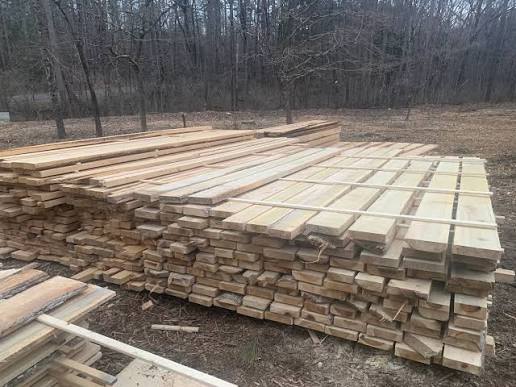
During the demonstration, an operator from Cody’s Tree Service used a portable sawmill to turn logs into two-by-six-inch boards. More than 100 high school and community college students participated, according to KOLO.
The logs came from the site of Lake Tahoe Community College’s future Public Safety Training Complex, which is under construction and is intended to support forestry and wildfire career education programs.
The resulting lumber is planned for a bus shelter serving the Tahoe Transportation District’s Route 50. Students will gain practical construction experience while helping turn locally sourced timber into a public amenity.
The project is funded through California Senate Bill 125, which provides funding for transit capital and operational needs.
Kira Richardson, senior transportation planner at the Tahoe Regional Planning Agency, described the project as a way to connect two regional needs.
“We have trees being removed as part of forest health work and a need for more transit shelters throughout the basin,” Richardson said, according to KOLO. “Trees to Transit creates a pathway between those two needs, turning locally sourced material into infrastructure that makes taking transit more comfortable and accessible.”
The Tahoe Regional Planning Agency is leading the specific Trees to Transit project in partnership with Tahoe Wood, the Tahoe Transportation District and local education and industry partners.
A gap between forest restoration and wood markets
The demonstration also highlighted a broader challenge facing forest management across the Sierra Nevada: Removing excess vegetation can improve forest conditions, but moving and processing the resulting wood can be expensive.
Tahoe Wood is a collaborative effort supported by organizations including the Tahoe Earth Institute, Tahoe Prosperity Center and Berkeley Wood Lab. Its work focuses on building stronger connections among forest managers, timber processors, local businesses and end users.
Erika Veidis of the Tahoe Earth Institute described the challenge as a reversal of the region’s historical relationship with timber.
“ We’re finding ourselves on the other side of the spectrum, where there’s not enough industry to support restoring the forests that now need to be thinned,” Veidis said at the demonstration.
Historically, intensive logging in the Tahoe region supplied timber to outside markets. Today, forest restoration and wildfire mitigation require different management practices, while the regional processing industry faces challenges absorbing the wood generated by those activities.
Veidis said an estimated 80% of lumber products used in California are imported from outside the state, even as public agencies and land managers work to improve forest conditions.
California’s forest resilience efforts underscore the scale of that challenge. The state’s Wildfire and Forest Resilience Task Force has outlined a goal of treating at least 1 million acres annually through coordinated forest and landscape management. The state’s treatment efforts include multiple approaches, such as thinning and prescribed fire, intended to improve landscape resilience.
For the Tahoe region, the question is not simply how to remove trees. It is also how to make the resulting material economically useful.
Transportation costs can undermine local projects
After trees are removed during forest treatments, crews must determine whether the material can be sold, processed for energy, used as firewood or otherwise put to productive use.
Hauling logs long distances can make those options less economical. According to figures presented by organizers, trees removed in the Tahoe region are often transported 70 miles or more, sometimes exceeding 100 miles, for processing.
Mike Vollmer, executive director of the Tahoe Resource Conservation District, said transportation costs have become a serious obstacle.
“Transportation of this material is getting to be close to impossible, and still be able to recover something on the other end,” Vollmer said during the demonstration.
When processing and transportation are not economically feasible, wood may be left in piles for later burning.
Vollmer outlined several potential uses for forest-treatment material, including firewood, electricity generation at bioenergy facilities and higher-value products such as lumber for fences, tables and other construction projects.
He characterized pile burning as the lowest-value use of the material.
The distinction matters because forest restoration projects must balance environmental objectives with the cost of carrying out the work. If the wood has no viable destination, transportation and disposal expenses can consume funding that might otherwise support additional restoration.
Keeping more processing and end uses close to where trees are removed could help reduce those costs, although the economics will depend on the material, available facilities, transportation distances and market demand.
Local businesses could help build a stronger wood economy
Frank Cody, owner of Cody’s Tree Service, said locally processing timber offers a way to combine forest management with practical economic use.
“Using this resource as close to where it grew as possible is probably the best idea,” Cody said. “I think that we can do the right thing for the trees while also using the resource rather than wasting it.”
Several regional facilities already process wood or convert it into energy. Examples cited by organizers include Tahoe Forest Products in Carson City, Alpenglow Timber in Truckee and the Northstar Community Services District Wood Energy Facility.
However, additional processing capacity does not automatically solve the problem. Large industrial facilities can require millions of dollars and years of planning and development. Smaller operations may be easier and less expensive to establish, but they often lack the production capacity and economies of scale of larger plants.
Tahoe Wood is working to strengthen the network of smaller businesses that can contribute to a regional wood economy.
That includes improving connections among companies and service providers involved in the process, from tree removal and log transport to milling, kiln drying, lumber grading and finished products.
The initiative has also created a directory intended to help residents and businesses locate wood-related services in the Tahoe region.
The broader goal is to create more opportunities for wood generated by forest restoration to remain economically productive within the region, rather than requiring every load to travel long distances for processing or disposal.
Students see the value of using local resources
For students who live in the Tahoe Basin, the demonstration offered a direct connection between forest management and the community around them.
Breslin Hambel, an 18-year-old South Tahoe High School student who was born at Barton Memorial Hospital and grew up hiking and climbing in the area, said the project helped him recognize the potential of resources available close to home.
“It’s a good thing,” Hambel said, “being able to use our resources around here instead of collecting them from other areas, when we have the resources right here [and can] put them to use and make our community better.”
The planned bus shelter gives students a tangible way to apply construction skills while participating in a project that connects natural resource management with public infrastructure.
It also provides a potential model for workforce development. Students can see how forest products move from a tree to a usable building material, while learning about the businesses and skilled trades involved at each stage.
For communities across El Dorado County and the greater Tahoe region, those connections may become increasingly important as agencies pursue forest treatments and look for ways to sustain the industries needed to support them.
Keeping the benefits close to home
Tahoe Wood’s approach draws on the idea that regional supply chains can keep more economic value within the communities that produce and use their resources.
Veidis compared the concept to knowing where food comes from and who produces it.
“In the same way that it can be important to ‘know your farmer,’ I think it’s also important to ‘know your trees,’” Veidis said.
She said residents can support local forest health by learning where timber originates, which businesses process it and who turns it into finished products.
That approach does not eliminate the need for large-scale facilities or guarantee that every tree removed during forest treatment can be used profitably. Some material will still be unsuitable for lumber, and processing capacity, transportation expenses and market demand will continue to shape what is practical.
But organizers say a more connected regional network could help identify useful destinations for a greater share of the material.
Veidis said continued progress will require collaboration, innovation, entrepreneurship, workforce development, funding and public outreach.
The Oct. 1 demonstration offered a small-scale example of what that cooperation can produce: trees removed from a construction site becoming lumber for a planned public bus shelter, with local students expected to help complete the project.
For Tahoe communities working to improve forest resilience, the longer-term opportunity is to make that kind of local use a more consistent part of forest management — supporting healthier landscapes while creating useful products, skilled jobs and economic activity closer to home.
To learn more about the Tahoe Wood initiative, visit tahoeearthinstitute.org/tahoewood.
Sources and Further Reading
- KOLO News: Students mill trees for new South Shore bus shelter in Trees to Transit project — Project details, student participation, funding and the anticipated spring 2027 installation.
- Sierra Business Council: Fall 2026 regional update — Details of the Oct. 1 Tahoe milling demonstration and its participating partners.
- California Wildfire and Forest Resilience Task Force: Roadmap to a Million Acres — Statewide context for forest treatment goals and regional restoration capacity.