CAMINO, Calif. — CAL FIRE Amador-El Dorado Unit firefighters are sharpening their chainsaw skills through specialized faller training designed to improve safety during wildland firefighting operations.
In a recent training session, AEU firefighters participated in a B Faller class, learning techniques for safely felling, limbing and bucking trees in wildland environments. The unit announced the training in a public update, emphasizing the role trained fallers play in removing hazards that can endanger firefighters and obstruct fireline operations.


“Trained fallers are an important part of wildland firefighting,” the unit said in its announcement.
The work involves more than operating a chainsaw. Firefighters must assess trees and surrounding conditions, determine how to remove hazards safely, and work in coordination with other personnel operating nearby.
Why faller training matters in El Dorado County
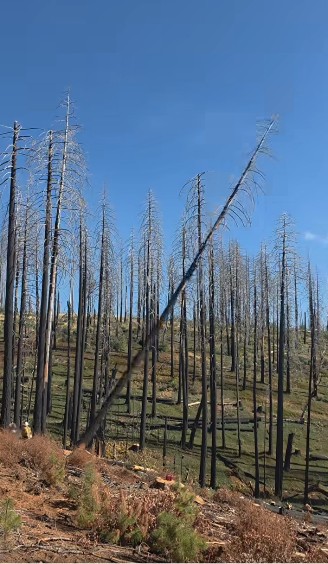
For residents in El Dorado County, where communities extend from the western foothills into heavily forested areas of the Sierra Nevada, hazardous trees can complicate emergency response. Fallen or unstable trees may block access roads, impede firefighting crews or create additional risks for personnel working in difficult terrain.
CAL FIRE’s Amador-El Dorado Unit serves areas in El Dorado and Amador counties, along with portions of other nearby counties. Its responsibilities include wildland fire protection across a region with extensive forest and rural terrain.
During wildfire operations, the ability to remove dangerous trees and clear obstructions can help crews reach affected areas and carry out their assignments. The work itself, however, carries significant risks, making specialized training and sound judgment essential.
What firefighters learn in a B Faller class
The training focuses on three fundamental chainsaw operations:
-
Felling: Cutting down a standing tree in a controlled manner.
-
Limbing: Removing branches from a felled tree.
-
Bucking: Cutting a tree trunk into shorter sections.
These skills are used in wildland fire operations, including work around hazardous trees and areas affected by fire. The National Wildfire Coordinating Group identifies chainsaw work, including felling, bucking and limbing, as core functions of wildland faller positions.
The level of qualification matters, too. Faller classifications reflect the complexity of the work a firefighter is trained and authorized to perform. Crews must recognize when a tree or situation exceeds their capabilities rather than take unnecessary risks.
Preparing for the next fire
The Amador-El Dorado Unit described the class as specialized preparation for conditions firefighters may encounter in the field.
Although the unit’s announcement did not identify the training location, the number of participants or whether the class resulted in new certifications, the exercise highlights an important element of wildfire readiness: preparing personnel to manage hazards before those hazards threaten a crew during an emergency.
For communities across El Dorado County, that preparation supports the broader work of protecting lives, property and access routes when wildfires put rural neighborhoods and forested landscapes at risk.
Source: CAL FIRE Amador-El Dorado Unit, public training announcement. Additional background: National Wildfire Coordinating Group — Basic Faller and El Dorado County — 2024 Amador-El Dorado Unit Fire Plan.