
RESCUE, Calif. — A controversial affordable housing project rejected by El Dorado County officials in 2024 has returned with a revised proposal that could limit local oversight under newly enacted California law.
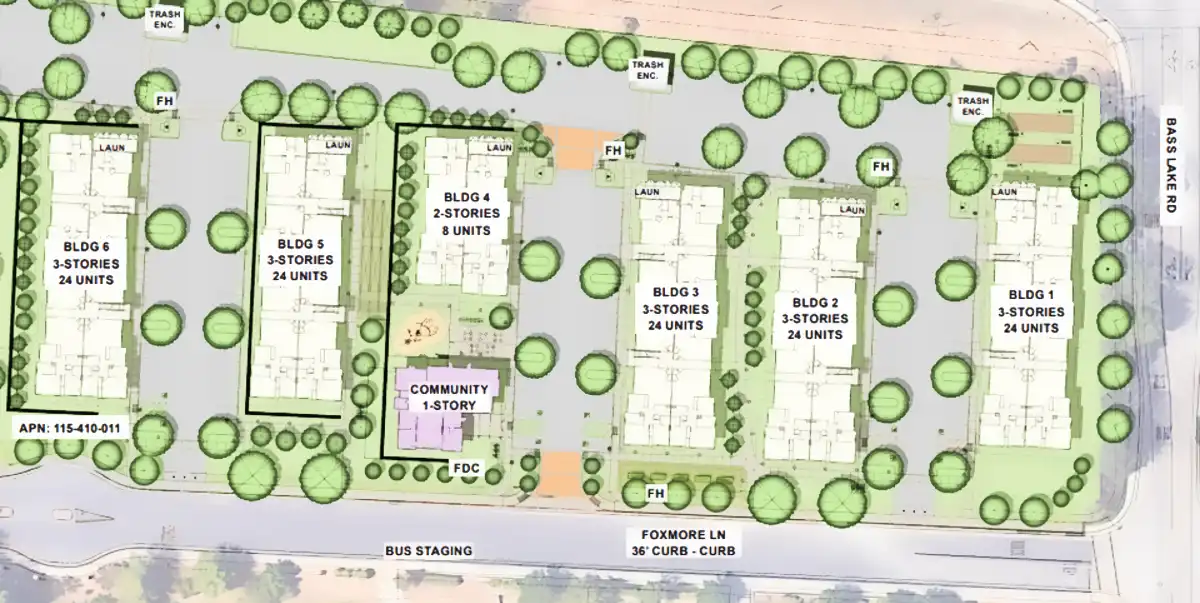
San Diego-based Affirmed Housing has submitted plans for the Green Valley Family Apartments, a 128-unit, 100% deed-restricted affordable housing development proposed for a 5.27-acre parcel at the southwest corner of Green Valley Road and Bass Lake Road in Rescue.


The project follows the Board of Supervisors’ rejection last year of a similar 126-unit proposal—then called the Bass Lake Family Apartments—citing environmental concerns tied to wetlands on the site. Those concerns previously disqualified the project from streamlined approval pathways under the California Environmental Quality Act.
However, the developer is now relying on recently enacted legislation, including Assembly Bill 893, which took effect Jan. 1, 2026. The law narrows the scope of local environmental review, limiting it to areas “physically disturbed by construction.” Affirmed Housing argues that the wetlands identified in the earlier denial fall outside the footprint of planned development and should no longer block eligibility for streamlined approval.
The application is being processed under Assembly Bill 2011, a statute designed to accelerate qualifying housing projects through a ministerial, staff-level review process—removing discretionary approval by elected officials if objective standards are met.
“El Dorado County is required to evaluate whether the project meets objective planning and zoning standards within a defined timeline,”
county planning officials noted in project materials posted to the public engagement portal.
Under state law, the county has 60 days from the March 5, 2026, application date to determine whether the proposal is consistent with local standards, setting an expected deadline in early June. A final decision must follow within 90 days—by early July—or the project could be deemed approved by default.
The proposed development includes 62 one-bedroom, 32 two-bedroom and 33 three-bedroom units, along with one manager’s unit. All apartments would be reserved for low-income households, generally targeting residents earning between 30% and 60% of the area median income. Rents would be capped so tenants pay no more than 30% of their income.
The project has reignited debate over the balance between state housing mandates and local land-use authority, particularly in rural and semi-rural communities like Rescue. Supporters argue the project addresses a critical shortage of affordable housing in El Dorado County, while critics have raised concerns about environmental impacts, infrastructure strain and compatibility with the surrounding area.
The county’s review is ongoing, with staff evaluating whether the revised proposal qualifies for the expedited approval process now required under state law.