EL DORADO COUNTY, Calif. — A long-anticipated reduction of roadside emergency call boxes across El Dorado County has left most of U.S. Highway 50 without the once-familiar safety devices, as transportation officials continue a shift toward modern, mobile-based assistance systems.
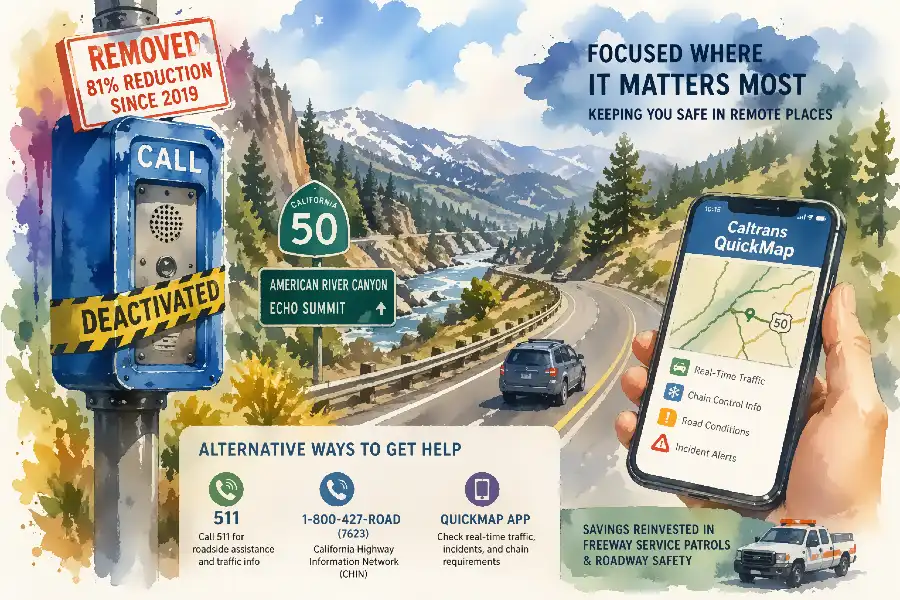
The plan, initially approved in late 2018 and rolled out publicly in 2019 by the Sacramento Area Council of Governments, resulted in the removal of 81% of call boxes in El Dorado County. In total, 154 call boxes were deactivated across SACOG’s six-county region.


Today, as of April 2026, the system remains operational but with a significantly reduced footprint. Remaining call boxes are concentrated in areas where cellular service is unreliable—primarily through the American River Canyon and over Echo Summit, two stretches of Highway 50 known for limited connectivity and challenging terrain.
Technological Shift Drives Change
The primary catalyst behind the reduction was the nationwide phase-out of 3G cellular networks, including the decommissioning by Verizon. Many of the call boxes relied on that outdated infrastructure.
Rather than invest heavily in upgrading every unit to 4G/LTE technology, SACOG and partner agencies opted to retain only those boxes deemed essential.
“The cost to retrofit every call box simply didn’t make sense given how rarely many of them were used,”
SACOG officials said in prior public statements.
“We focused resources where they are most needed—areas without reliable cell service.”
What Drivers Should Know Now
With fewer call boxes available, transportation agencies and motorist organizations are urging drivers to take additional precautions before traveling through El Dorado County’s rural corridors.
Officials recommend:
- Ensuring mobile phones are fully charged before trips
- Carrying backup charging devices
- Planning routes in advance, especially in mountain areas
Motorists can also access alternative services:
- Dial 511 for traffic and roadside assistance information
- Call the California Highway Information Network (CHIN) at 1-800-427-ROAD (7623)
- Use the Caltrans QuickMap app for real-time updates, including chain controls and incidents
Funding Redirected to Modern Services
The call box system is funded through a $1 annual vehicle registration fee paid by California drivers. Savings generated from the large-scale deactivation have been redirected toward other safety initiatives, including freeway service patrols and expanded roadside assistance programs.
Transportation officials maintain that the reallocation reflects evolving driver behavior.
“Today’s motorists overwhelmingly rely on smartphones for emergency communication,” officials noted. “Our goal is to align resources with how people actually seek help on the road.”
Local Impact
For El Dorado County residents and travelers, the change is most visible along Highway 50, where call boxes once appeared at regular intervals. While their absence may be noticeable, officials emphasize that coverage remains in the county’s most remote and high-risk areas.
Still, the transition underscores a broader shift away from fixed roadside infrastructure toward digital, on-demand services—placing more responsibility on drivers to be prepared before heading into the Sierra.