PLACERVILLE — The California Legislature has sent a bill aimed at a growing problem in school hallways and household hazardous waste facilities to the governor: vape products designed to look like something else.
Assembly Bill 2667, authored by Assemblymember Heather Hadwick, R-Alturas, and co-authored by Assemblymember Buffy Wicks, D-Oakland, passed the Assembly and Senate before receiving unanimous concurrence in Senate amendments on Aug. 30. The measure was enrolled Sept. 3 and is now awaiting consideration by the governor.


The legislation takes aim at more than conventional vaping products.
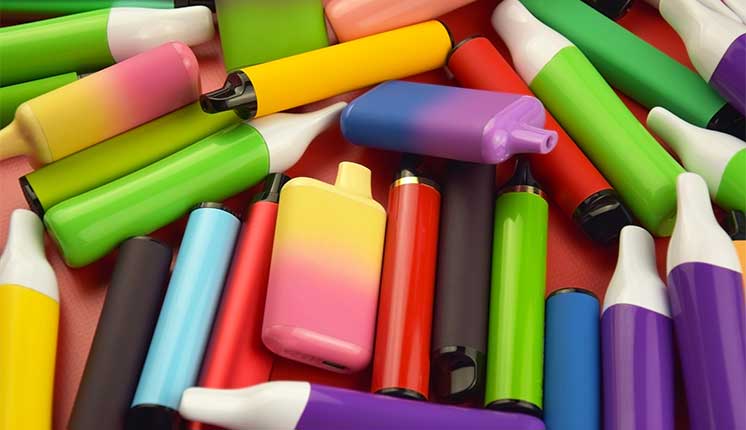
Under AB 2667, California would prohibit the marketing, advertising, distribution or sale of vape products designed to conceal what they are from parents, teachers or other adults. The prohibited designs specifically include products resembling common school supplies such as erasers, highlighters, pens and pencils. The bill also targets vapes made to resemble food, candy, desserts, beverages, clothing or accessories marketed to minors.
Another provision specifically prohibits vape products containing interactive videogame capabilities.
That distinction matters in schools, where a device that looks like an ordinary pen or other everyday object can be considerably harder for teachers and administrators to identify.
Hadwick made the issue a central argument for the legislation during a June Senate committee hearing.
“Disguised vapes are poisoning our kids, causing fires at small underfunded waste facilities and wasting precious taxpayer dollars on additional processing costs,” Hadwick told lawmakers.
A Waste Problem Beyond the School Office
The bill’s second major component deals with what happens after a vape is confiscated.
A vape is not simply an electronic gadget that can be tossed into an electronics recycling bin. The devices can contain batteries, electronic components and residual nicotine, cannabis or other vaporized liquids. That combination creates a complicated waste stream for schools and local collection programs.
AB 2667 would establish a process allowing a public agency, its contractor or a registered hazardous-waste transporter to move vape devices confiscated from students at a school to a household hazardous waste collection facility under specified conditions. The devices would have to be transported in closed containers bearing the school’s Environmental Protection Agency identification number and remain subject to applicable waste limits.
The legislation also directs the California Department of Toxic Substances Control to evaluate ways to make the management and disposal of student-confiscated vape devices safer and more convenient. That evaluation is scheduled to remain in effect until Jan. 1, 2030, and must identify recommendations requiring future legislative action.
The changes could be significant for rural counties, where hazardous-waste programs often operate with limited staff, facilities and budgets.
The Rural County Representatives of California, which sponsored AB 2667, said the bill is intended to address three problems at once: deceptive youth-oriented vape products, disposal of devices confiscated at schools and the cost and complexity of managing vape waste at local household hazardous waste facilities.
What It Could Mean for El Dorado County
El Dorado County already has an extensive household hazardous waste system covering batteries, electronic waste, automotive fluids, chemicals, pesticides and other materials that cannot safely go into the regular waste stream. County information identifies permanent HHW collection facilities serving the Placerville and South Lake Tahoe areas, while temporary collection events are also conducted.
There is an important local wrinkle.
The former HHW collection facility at El Dorado Hills Fire Department Station 86 permanently closed after the county’s agreement with the fire department ended Dec. 31, 2024. The county says it continues to provide temporary HHW collection events while searching for a new permanent facility.
El Dorado County’s waste programs already recognize batteries and electronic equipment as materials requiring special handling. The county warns that universal wastes can release hazardous contents when damaged or improperly disposed of and identifies household batteries and electronic waste among the materials requiring controlled disposal.
For local schools, however, a confiscated vape presents a different problem than a household battery.
AB 2667 specifically addresses schools classified as very small quantity generators and creates a pathway for school-confiscated vapes to be transported to an authorized HHW facility under an agreement with that facility. The legislation also establishes rules for calculating the amount of hazardous material represented by vape cartridges when determining applicable collection limits.
Enforcement Has Teeth
AB 2667 would not merely establish voluntary guidelines.
The legislation allows cities, counties and the state to enforce the prohibition on disguised and interactive-videogame vapes. Civil penalties could reach $1,000 for a first violation, $2,500 for a second violation and $5,000 for subsequent violations. Distributors could face a civil penalty of up to $50,000 per violation. A violation would also constitute an infraction punishable by a fine of up to $500.
The measure also allows prohibited vape products discovered by an enforcement agency at a tobacco retailer to be seized and forfeited.
That gives local enforcement agencies another tool aimed at the retail side of the problem rather than placing the entire burden on schools after products have already reached students.
Legislature Gives Bill Unanimous Final Approval
AB 2667 advanced with unusually broad bipartisan support.
The Assembly passed the bill 76-0 on May 28. The Senate later passed it, and on Aug. 30 the Assembly voted 78-0 to concur in the Senate amendments.
During the final Assembly discussion, Hadwick described the measure as addressing youth vaping, school confiscations and hazardous-material handling.
“This bill also addresses vapes confiscated by schools and disassembly of vapes by household hazardous waste facilities,” Hadwick said during the Aug. 30 floor debate.
The final legislation is narrower and more technical than simply declaring certain vape designs illegal. It attempts to address the entire chain — from how the products are marketed, to how schools handle confiscated devices, to how local hazardous-waste programs transport and manage them.
For El Dorado County, that last piece could prove particularly important.
Local governments are already responsible for maintaining hazardous-waste collection systems, and the county’s experience with the closure of the El Dorado Hills HHW facility demonstrates the practical challenges of providing those services across a geographically large, largely rural county.
AB 2667 does not eliminate those costs. But it attempts to make one particularly difficult waste stream easier to identify, transport and manage while removing products designed to make detection by adults more difficult.
The legislation now moves out of the Capitol and into the governor’s hands.
If signed, the measure would add a new layer of state regulation to California’s already extensive vaping laws — with consequences that could be felt not only in Sacramento, but in classrooms, school offices and hazardous-waste facilities throughout El Dorado County.