COOL, Calif. — When a 911 call came from Cool on the evening of Sept. 15, 2026, there was no time to waste.
A man was not breathing.

Within 11 seconds of receiving the caller’s location, the Camino Emergency Command Center dispatched emergency resources. But while firefighters and emergency medical personnel were racing toward the scene, another critical part of the rescue was already underway over the telephone.
Communication Operator Alisa Oldag remained on the line with the man’s wife, Teresa, for nearly 15 minutes, providing CPR instructions and helping her stay focused during what was an intensely frightening emergency.
Oldag’s role was not visible at the scene. She wasn’t the person performing CPR or transporting the patient to the hospital. She was the voice on the other end of the phone, providing instructions and reassurance while help was still on the way.
When the first EMS personnel arrived, they took over CPR.
Within approximately 20 minutes, the patient was loaded for transport to a local hospital.
The call that dispatchers hope to receive
For emergency dispatchers, a successful outcome can be difficult to measure.
Communication operators frequently handle some of the worst moments of a person’s life. They take the initial call, determine what is happening, dispatch the appropriate resources and, when necessary, provide instructions that can help keep a patient alive until responders arrive.
They often never meet the people they assist.
And they may never learn what happened after the ambulance left.
That changed several weeks after the Cool emergency.
The Camino Emergency Command Center received an unexpected call from Teresa, who wanted to express her gratitude for the support she received from Oldag that night.
More importantly, she had good news.
Her husband had survived.
He was back home and recovering.
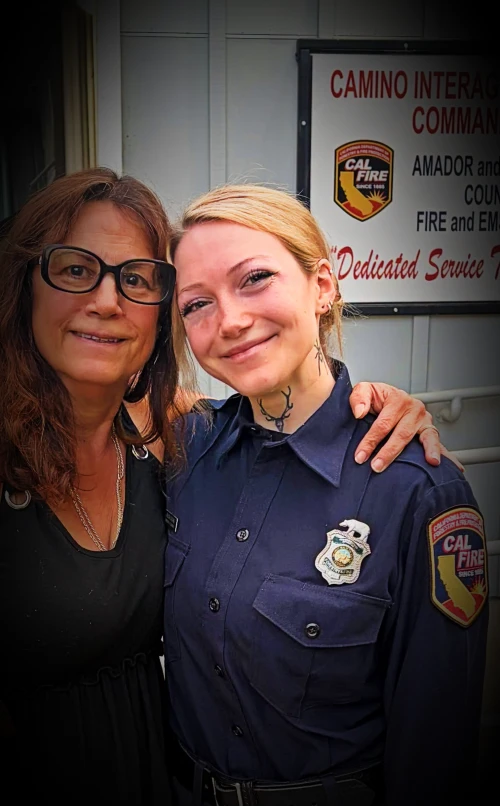
The family later had an opportunity to meet the ECC personnel who helped during the emergency, allowing Teresa to personally thank Oldag for staying with her through those critical minutes.
For the CAL FIRE Amador-El Dorado Unit and Camino Emergency Command Center, the meeting offered something emergency dispatchers don’t always get: the opportunity to see the outcome of a call that could easily have ended differently.
Every second matters
The incident underscores one of the most important principles in emergency response: time matters.
From the moment a 911 call is received, multiple pieces of the emergency system must work together. The call must be answered, the location identified, resources dispatched and responders sent to the scene.
For a cardiac or respiratory emergency, the actions of people at the scene can also be critical while professional help is traveling.
In this case, Teresa was not alone.
Oldag stayed on the telephone and guided her through CPR until EMS personnel arrived.
That work is a fundamental part of the emergency communications system, even though the public rarely sees it.
“This is why every second matters,” the CAL FIRE Amador-El Dorado Unit said in recounting the incident. “This is why CPR instructions over the phone matter.”
The agency also emphasized the importance of the people working behind the scenes at Camino ECC, describing 911 communication operators as an essential part of the emergency response system.
The story is also a reminder to El Dorado County residents that a 911 call is more than a request for an ambulance or fire engine. Dispatchers can provide immediate instructions while emergency crews are still traveling to the scene.
For residents who find themselves facing a medical emergency, those first minutes can be critical.
In Cool on Sept. 15, those minutes mattered.
A dispatcher answered the call. Emergency crews were dispatched within seconds. A wife performed CPR with guidance from a voice on the telephone.
And, weeks later, the call came that everyone in emergency services hopes to receive:
Her husband was alive and recovering at home.
For Oldag and the personnel at Camino Emergency Command Center, it was a rare opportunity to see the human result of work that normally happens out of public view.
For Teresa and her family, it was the chance to say thank you.