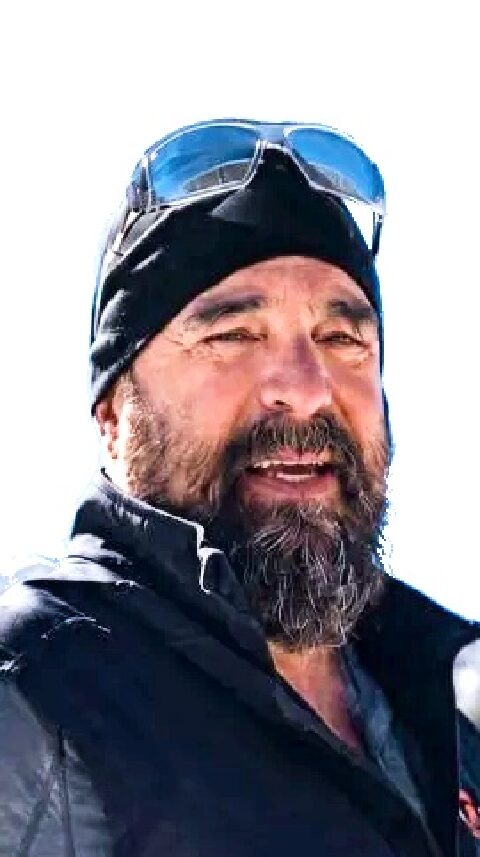
A Lake Tahoe-area resident with a career in aviation and a background as a U.S. Army veteran died while doing one of the most hazardous jobs in the firefighting profession: flying directly into an active wildfire.
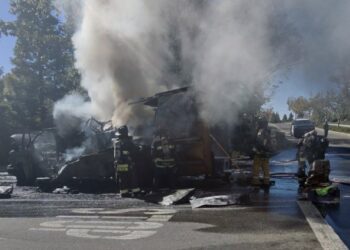
Christopher V. Andersen, 64, was one of two pilots killed when a Sikorsky S-64 Skycrane crashed while supporting firefighting operations on the Widemouth 2 Fire in central Utah.

Andersen’s death brings the dangers of aerial firefighting close to home for residents throughout the Lake Tahoe region and neighboring El Dorado County, where helicopters and air tankers are a familiar sight during California’s increasingly demanding wildfire seasons.
The second pilot was identified as Miles Elliott, a Porterville, California, native. Elliott and Andersen were employees of Helicopter Transport Services, which was operating the aircraft under an exclusive-use contract with the U.S. Forest Service.
A dangerous mission over a rapidly growing fire
The Widemouth 2 Fire began July 27 after a suspected lightning strike south of Kanosh in Millard County, Utah. The fire expanded rapidly amid hot, dry and windy conditions, eventually burning more than 100,000 acres across the region.
Early in the incident, residents south of Kanosh were placed under evacuation warnings as firefighters and aircraft attacked the growing blaze.
The helicopter went down in remote, mountainous terrain near Richfield while crews were conducting aerial firefighting operations.
The crash itself ignited another fire, adding another hazard to an already dangerous environment.
Tyler Hecht, deputy incident commander with the Great Basin Incident Management Team, described the terrain surrounding the crash site as “very difficult.”
Fire crews temporarily paused operations and regrouped before returning to the fireline.
Rescuers faced a dangerous delay
The crash did not immediately produce a conventional search-and-rescue response.
Active fire conditions and rugged terrain prevented ground personnel from safely reaching the helicopter. Officials determined that sending additional firefighters into the area before conditions improved could expose them to unacceptable risk.
Crews eventually reached the crash site and confirmed that both pilots had died.
The National Transportation Safety Board and Federal Aviation Administration are investigating the crash. Officials have cautioned against speculation about what caused the accident while investigators examine the wreckage, aircraft systems and environmental conditions.
Aerial firefighting carries extraordinary risk
For residents of Lake Tahoe and El Dorado County, the loss carries particular significance.
The Sierra Nevada is no stranger to aerial firefighting. During major wildfires, residents routinely watch helicopters, air tankers and other aircraft operate over steep forested terrain as crews work to slow fires and protect communities.
Those aircraft are not simply machines delivering water or retardant. They are occupied by pilots operating in some of the most unpredictable conditions in aviation.
Smoke can obscure visibility. Mountain terrain creates rapidly changing winds and turbulence. Fire produces its own weather patterns, while pilots must maneuver close to steep slopes and ridgelines.
The Sikorsky S-64 Skycrane is specifically designed for heavy-lift operations, including wildland firefighting. The helicopter can carry substantial quantities of water or retardant and make repeated drops over an active fire.
Andersen’s aviation background included qualifications for the S-64, according to publicly available aviation records.
Utah Gov. Spencer Cox acknowledged the risks faced by the pilots and firefighters responding to the blaze.
“They put themselves in harm’s way to protect our state and gave their lives in that service,” Cox said. “Utah will never forget their courage, their service, and their sacrifice.”
A loss felt across the Lake Tahoe region
Andersen’s death is more than another statistic in a devastating wildfire season.
For the Lake Tahoe community, his death represents the loss of a local resident who dedicated his professional life to aviation and aerial firefighting.
It is also a reminder to communities throughout the Sierra Nevada that the pilots seen circling above a wildfire are taking enormous personal risks to protect people and property on the ground.
That reality is particularly familiar in El Dorado County.
From the forests surrounding Pollock Pines and Camino to the foothills west of Placerville and the communities along the Highway 50 corridor, wildfire preparedness and aerial firefighting have become an increasingly important part of life in the Sierra.
When residents see firefighting aircraft overhead, they are seeing crews working under conditions that can change in seconds.
Investigation continues
The circumstances surrounding the Widemouth 2 Fire crash remain under investigation.
Federal investigators will examine the aircraft, flight operations, weather, terrain and other factors as they work to determine what caused the crash.
For now, the loss is being felt by the aviation and firefighting communities — and by the Lake Tahoe region Andersen called home.
Christopher V. Andersen was 64.
He and fellow pilot Miles Elliott went to work over a dangerous wildfire.
They did not return.
Their deaths serve as a sobering reminder of the risks accepted by the men and women who take to the air when wildfires threaten communities on the ground.
Sources
- National Transportation Safety Board — federal agency responsible for investigating the aviation crash.
- Federal Aviation Administration — federal aviation safety and regulatory agency.
- U.S. Forest Service — federal agency responsible for the wildfire response and aviation contracting.
- KSL News — reporting on the Widemouth 2 Fire and evacuations.
- San Francisco Chronicle — reporting on the identification of the two pilots and crash.
- Publicly available aviation records concerning Andersen’s pilot qualifications.