A hilltop that holds generations of Placerville history
PLACERVILLE, Calif. — Some places are remembered for what happened there. Others are remembered because generations of families have made them part of their lives.
Reservoir Hill, overlooking Placerville, belongs in the second category.

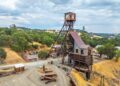
Its history reaches back to the earliest years of the California Gold Rush, when prospectors, merchants and settlers converged on what was then known as Hangtown. Today, the hill remains an important part of Placerville’s historical landscape, but its significance extends beyond mining claims and old property records. It also preserves the memories of families whose roots in El Dorado County reach back more than a century.
One of those connections belongs to Shannon Thomas Casebeer, whose family history and poetry offer a personal window into the area’s past.
In his published recollections, Casebeer describes growing up on Reservoir Hill, surrounded by family, orchards, open countryside and the landscape of the Sierra foothills. His memories are not simply recollections of childhood. They are part of a much longer family story that connects the modern community with the pioneer generation.
A family connection reaching back to 1849
Casebeer’s family history traces through his maternal ancestors to the Camp family.
According to his account, Asa Steven Camp arrived in Hangtown with his father, Clark, in 1849. The two tried their fortunes as prospectors, filing several mining claims before returning east. Asa later came back to Placerville in 1854, eventually establishing a family and building a life in the region.
That distinction matters: The family’s Gold Rush connection predates Casebeer’s own generations and comes through his Camp ancestors.
Another important figure in the family history was Asa Wilder Daniels, Casebeer’s great-grandfather. Daniels arrived in Placerville in 1888 and purchased 40 acres on Reservoir Hill. He operated a freight service, served for a time as Justice of the Peace and established a family connection to the hill that continued through subsequent generations.
Casebeer describes the property as the setting for much of his childhood. His recollections include a family home, neighboring relatives, orchards, animals and the freedom of exploring the surrounding countryside.
He also recalls growing up in a cabin modeled after the family’s historic barn before eventually moving to Missouri in 1978.
Those details provide something that official histories and property records often cannot: a sense of what it was like to grow up in a place shaped by generations of family history.
Reservoir Hill’s place in the Gold Rush landscape
Reservoir Hill’s historical significance is not limited to family heritage.
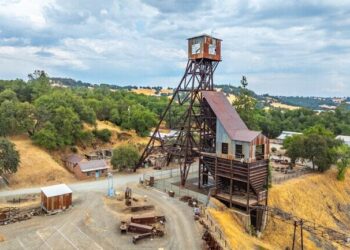
Placerville developed in the midst of the extraordinary mining activity that followed James Marshall’s January 1848 gold discovery at Coloma. The mining camps spread throughout the surrounding hills and ravines, creating communities that would eventually become the foundation of El Dorado County.
The California Office of Historic Preservation identifies Old Dry Diggins, Old Hangtown and Placerville as successive names associated with the historic mining settlement established along Hangtown Creek in 1848. Millions of dollars in gold were extracted from the surrounding hills and ravines.
Reservoir Hill was part of that broader mining landscape.
An 1883 historical account of El Dorado County documents mining operations associated with the region’s water and mining companies. It specifically lists Reservoir Hill among the mines operated in whole or in part by the El Dorado Water and Deep Gravel Mining Company. The account also identifies the Excelsior Mine as one of the company’s most significant operations.
The connection between mining and water was fundamental to the development of the Mother Lode. Water was needed not only for daily life but also for mining operations that depended on hydraulic methods and other water-intensive processes.
As the Gold Rush economy evolved, the hills surrounding Placerville continued to support mining, agriculture, ranching and transportation.
Reservoir Hill eventually became more than a mining location. Its properties developed into homesteads and ranches, creating a landscape where agricultural life and mining history existed side by side.
A view that helped define home
For Casebeer, one of Reservoir Hill’s most enduring qualities was its remarkable setting.
He recalls the panoramic views from the family’s property: the snow-covered Sierra Nevada to the north, the Coastal Range to the west, the Sacramento Valley to the south and Miller’s pear orchard to the east.
The surrounding countryside offered orchards, wooded hillsides, wildlife and open space. It was a childhood landscape that Casebeer remembers with considerable affection.
In one of his poems, he captures the experience:
I remember sitting on Reservoir Hill
While watching storm clouds grow
And listening to the windswept pines
As their branches filled with snow.
The poem continues with an image of the American River canyon disappearing beneath a bank of fog and Placerville’s distant streetlights glowing through the evening.
It is a distinctly local scene, recognizable to anyone familiar with the winter weather and changing light of the western Sierra foothills.
For those who grew up in rural El Dorado County, the imagery carries a particular familiarity. The sound of wind through the pines, winter storms moving across the hills and the glow of a small town below are experiences that often become inseparable from memories of home.
From family memories to Gold Rush poetry
Casebeer has turned those memories and family stories into a collection of poetry and historical storytelling.
His video series, Hangtown Tough: A Gold Rush Tale, revisits the experiences of the early settlers through humorous verse, colorful language and a storyteller’s appreciation for the hardships of frontier life.
One of the featured poems, titled Hangtown, 1849, imagines the journey of newcomers heading west in search of gold.
The poem begins:
We headed for Hang Town in 49,
But never showed till 50.
From there, the imagined travelers encounter the realities of crossing the Sierra Nevada: rugged trails, freezing temperatures, uncomfortable accommodations and the persistent uncertainty of finding gold.
Their accommodations are hardly luxurious. A tent with a dirt floor, mice, damp bedding and a wood stove becomes home. Even the stove, according to the narrator, has its limitations when winter temperatures plunge.
The humor is deliberate. Rather than romanticizing the Gold Rush, Casebeer gives his imagined pioneers a voice that sounds more like ordinary people discovering that the promised land might be considerably less comfortable than advertised.
His description of frontier lodging is particularly memorable:
The tent’s mighty cozy, though lacking for room, with a dirt floor infested with mice.
The poem eventually turns toward a tongue-in-cheek invitation to visit Hangtown, complete with warnings about the cost of living and the need to bring plenty of money.
It is humor rooted in history, but it also reflects an understanding of the optimism, hardship and occasional absurdity that accompanied westward migration.
Preserving Placerville’s history through storytelling
Casebeer’s work is significant because local history is not preserved exclusively in museums, courthouse records or historical markers.
It also survives through family stories, photographs, personal recollections and the creative efforts of people who want future generations to understand what came before them.
His writings about Reservoir Hill preserve memories of a landscape that has changed considerably over the years. They also provide a personal connection to people such as Asa Steven Camp and Asa Wilder Daniels, whose lives were intertwined with the development of the Placerville community.
There is another important distinction between remembering history and simply romanticizing it.
The Gold Rush brought extraordinary opportunity, but it also brought difficult travel, harsh living conditions, economic uncertainty and the displacement of the Native people who had lived in the region long before the arrival of the miners.
Casebeer’s humorous treatment of pioneer hardships offers an accessible entry point into that complicated period. The historical record supplies the broader context, while family memories provide the human perspective.
And that may be Reservoir Hill’s most enduring contribution to Placerville’s identity.
The hill is more than an elevation overlooking downtown. It is a place where mining history, family heritage, ranching traditions and childhood memories intersect.
For Casebeer, those connections are personal. For the rest of El Dorado County, they are part of a larger community story worth preserving.
After all, the history of Placerville is not found only along Main Street or in the stories of the famous Gold Rush figures.
Sometimes, it begins on a hill above town, where a family gathered, the snow fell through the pines and a young boy listened to stories about the people who came before him.
And sometimes, the best way to preserve those stories is to put them into verse.
An important detail in the Bell Tower’s history
Reservoir Hill is sometimes associated with another familiar Placerville landmark: the downtown Bell Tower.
There is, however, a discrepancy in published historical accounts concerning its temporary relocation.
The Placerville walking-tour history published by the Elk Grove Historical Society says the Bell Tower was moved to Reservoir Hill and returned downtown following the 1910 courthouse fire. The City of Placerville’s official account gives a different location and timeline: It says the tower was dismantled and moved to Cannon Hill in 1911, then returned to the downtown plaza in 1912 because of difficulties ringing the bell from its temporary location.
The distinction is worth preserving rather than presenting the competing accounts as settled fact. Both accounts reinforce the Bell Tower’s place in Placerville’s history, but the exact location of its temporary home deserves further examination through historical photographs and municipal records.
The history that lives beyond the historical markers
Reservoir Hill’s story is ultimately a reminder that local history is more than a collection of dates, buildings and mining statistics.
It is also about the families who stayed, the children who grew up on the land, the orchards that once defined the countryside and the stories passed from grandparents to grandchildren.
Casebeer’s poetry brings those connections into the present. His recollections give readers and viewers an opportunity to see Placerville through the eyes of someone whose family history is intertwined with the community’s earliest generations.
For those who call El Dorado County home, that is a valuable reminder: We don’t have to look very far to find history. Sometimes, it is right above Main Street, waiting to be remembered.
Historical and reference sources
The Casebeer material is a firsthand family recollection, not an independently verified genealogical record. The article distinguishes personal recollection from documented history accordingly.